Blogs by Chipin

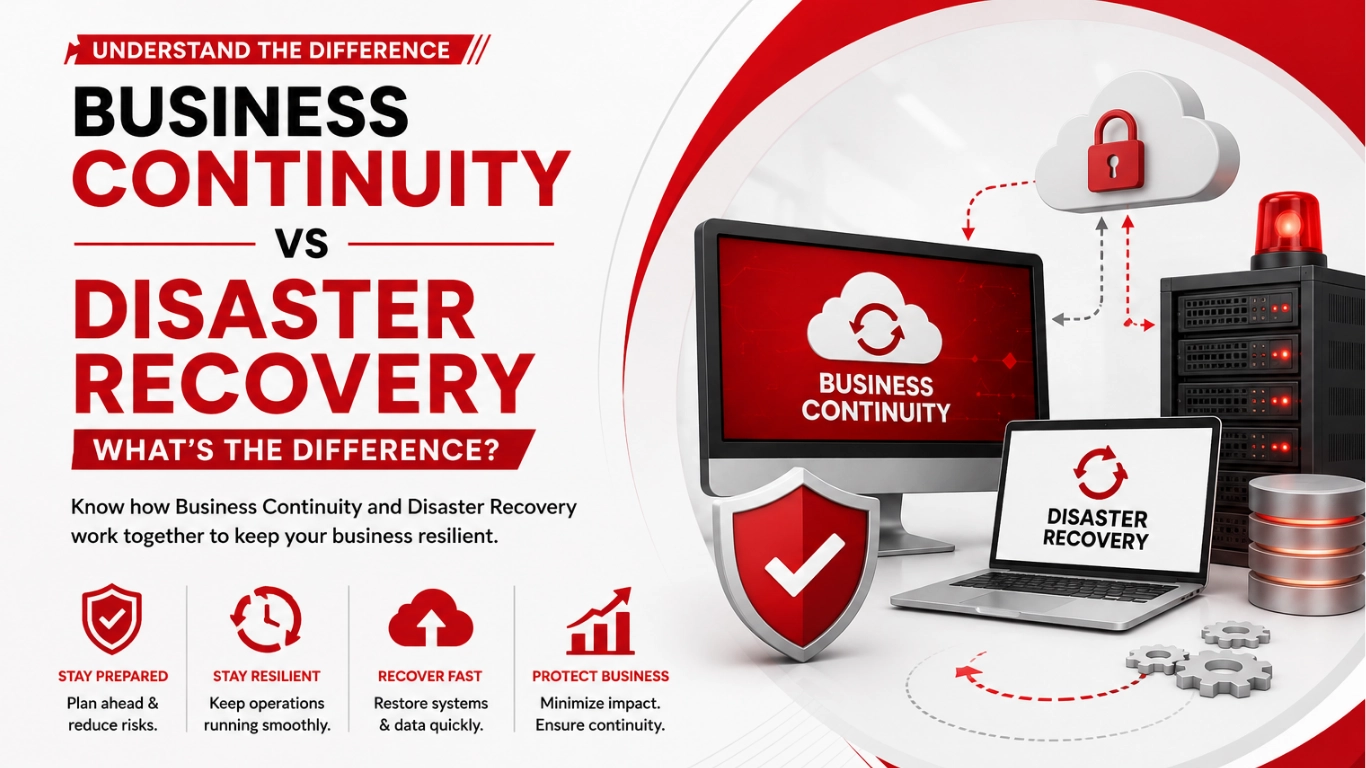
Business Continuity vs Disaster Recovery: What’s the Difference?

Business Continuity vs Disaster Recovery What's the Difference

Today’s businesses rely on technology, data, employees, communication, and digital application systems. However, most businesses suffer when there is a cyber-attack, server failure, loss of power, natural disasters, or when other events occur that are unexpected.

Many companies are blurry when describing the terms business continuity and disaster recovery as though they were synonymous terms. While they do have a strong correlation, they are definitely different. Learning that distinction is important as both assist in reducing downtime and assist a company during a time when it is least expected.

Business Continuity focuses on keeping essential business functions running during and after a disruption. Disaster recovery, on the other hand, focuses more specifically on restoring IT systems, applications, infrastructure, and data after an incident. 

If the main office of a business is not available due to certain restrictions, Business Continuity might allow employees to work from alternative locations, follow different procedures, communicate with clients, and still offer essential services. At the same time, the recovery of the servers, applications, databases, and data may be the main focus of the disaster recovery plan.

Here you will find the differences between business continuity and disaster recovery, how they work together, and how UAE businesses should plan for both.

What Is Business Continuity?

Business Continuity allows an organization to maintain or rapidly resume critical business processes after a major disruption.

Business Continuity deals with a wide range of aspects beyond technology. A Business Continuity Plan may include employees, business processes, facilities, suppliers, communication, technology, and the resources needed to perform operations.

The aim of Business Continuity is not to return to normal as quickly as possible, but to identify the functions that are of highest priority and find ways to continue those functions.

For example, imagine a business experiencing a major IT outage. A Business Continuity Plan may answer questions such as:

  • Which business operations must continue first?
  • Which employees are responsible for critical tasks?
  • Can staff work remotely or from another location?
  • How will customers and suppliers be informed?
  • What manual processes can be used temporarily?
  • Which systems need the fastest recovery?
  • What should employees do during a prolonged outage?

A Business Continuity Plan allows an organization to continue functioning when the processes that are normally available are not.

Each organization is unique and therefore, the Business Continuity strategies that each organization implements need to be unique as well. What is critical to a financial firm may not be the same as what is critical to a trading firm, a healthcare provider, a logistics firm, or a professional services firm.

What Is Disaster Recovery?

Disaster recovery is the process of restoring IT systems and technology after a disruptive event.

Though Business Continuity is more concerned with the entire organization, disaster recovery is more concerned with the elements of technology. It may include servers, virtual machines, databases, applications, networks, cloud services, and business data.

A Disaster Recovery Plan indicates what actions the organization will take to bring back the components of IT when there are events such as:

  • Ransomware attacks
  • Server failures
  • Hardware damage
  • Software corruption
  • Data loss
  • Network outages
  • Cybersecurity incidents
  • Fire or physical damage
  • Major system failures

For example, if a ransomware attack encrypts a company’s servers, the disaster recovery process may involve isolating affected systems, accessing clean backups, rebuilding infrastructure where necessary, and restoring applications and data.

Disaster recovery is an essential part of a company’s Business Continuity Plan.

Without good recovery capabilities, a company may be unable to restore the services on which business operations rely.

Business Continuity vs Disaster Recovery: The Main Difference

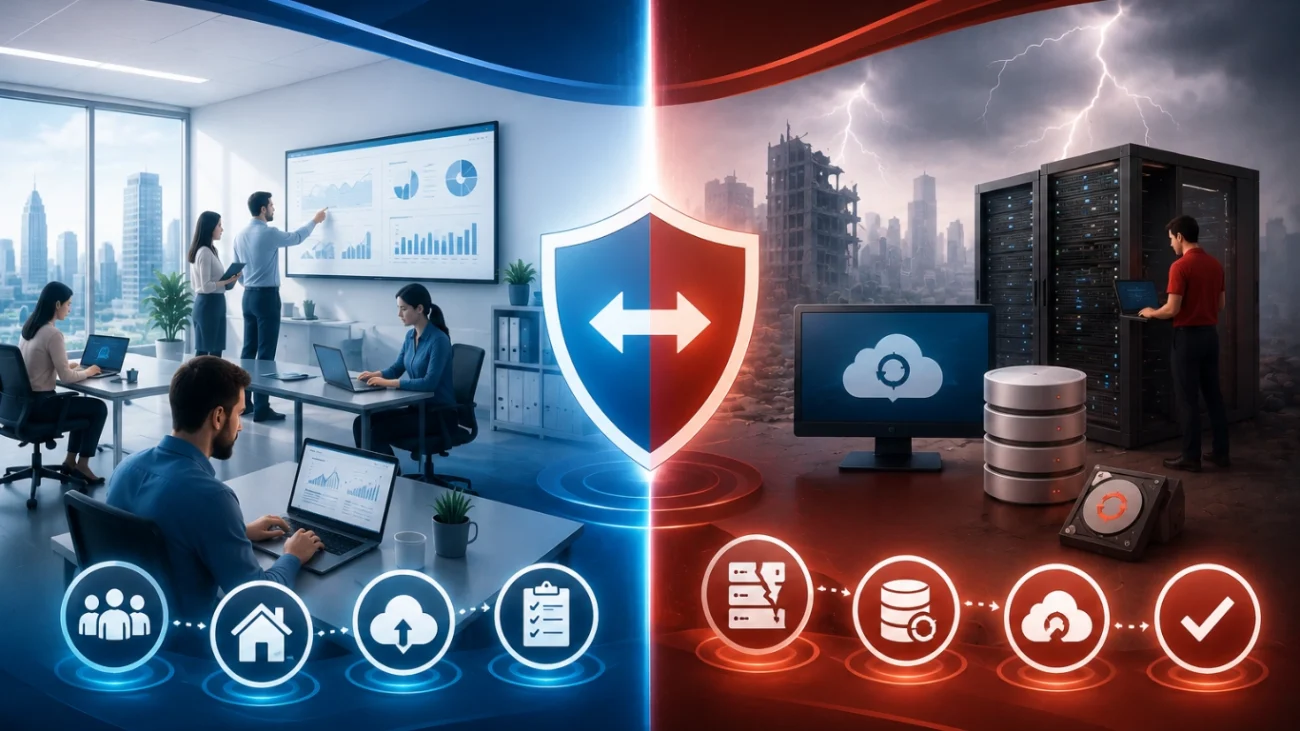
Business Continuity vs Disaster Recovery The Main Difference

The easiest way to understand the difference is to look at their primary objectives.

Business Continuity asks: How can the business continue operating during a disruption?

Disaster Recovery asks: How can we restore the affected IT systems and data?

Here is a simple comparison:

Area

Primary Focus

Scope

Main Goal

Covers Employees

Covers Facilities

Covers Data Recovery

Alternative Work

Example

Business Continuity

Business operations

People, processes, technology

Keep services running

Supports business staff

Alternative work locations

Includes recovery planning

Supports remote work

Staff work remotely

Disaster Recovery

IT systems and data

IT infrastructure only

Restore affected systems

Supports IT teams

IT recovery locations

Restores critical data

Focuses on restoration

Systems restored from backups

In simple terms, Business Continuity helps the organization keep moving, while disaster recovery helps restore the technology needed to return to normal operations.

Both are essential because restoring IT systems alone may not solve every business problem. At the same time, alternative business processes may not be sustainable for long if critical technology cannot be recovered.

Why Businesses Need Both Business Continuity and Disaster Recovery

A common mistake is to believe that having data backups alone is enough to protect a business.

Backups are extremely important, but they are only one part of a larger recovery strategy.

For example, imagine a company has a complete backup of its data. After a major server failure, the business still needs to know:

  • Where will systems be restored?
  • How long will recovery take?
  • Which applications should be restored first?
  • Who is responsible for the recovery?
  • How will employees continue working during the outage?
  • How will customers be informed?
  • What happens if the primary office cannot be used?

These questions involve both disaster recovery and Business Continuity.

A comprehensive strategy connects the two areas. While the disaster recovery plan restores the technology component, the Business Continuity plan addresses recovery for the remainder of the business.

Together, they can help businesses:

  • Reduce operational downtime
  • Protect critical data
  • Recover systems faster
  • Maintain customer communication
  • Reduce financial losses
  • Improve organizational resilience
  • Prepare employees for emergencies
  • Protect business reputation

Key Components of a Business Continuity Plan

The needs of different organizations may vary, but most complete Business Continuity plans generally feature specific elements. 

Business Impact Analysis

A Business Impact Analysis (BIA) helps a company identify the most critical company functions.

The goal is to determine the potential impact a disruptive event may have on various business functions and processes. Some functions or processes may have the capacity to tolerate a temporary loss, while others may have to continue without interruption.

A BIA can help identify:

  • Critical business services
  • Important applications
  • Key employees and responsibilities
  • Dependencies between systems
  • Acceptable downtime
  • Financial and operational impact

Business Impact Analysis informs business priorities for recovery and continuity efforts. 

Critical Business Processes

In the context of a disruption, some activities require more immediate attention than others.

A Business Continuity plan should capture the processes that a business can not afford to lose in order to continue operations.

In most cases, such processes involve customer support, order processing, financial transactions, communication, logistics and production, as well as provision of critical business information.

Alternative Work Arrangements

Employees may be unable to access the main office because of a physical emergency, infrastructure failure, or other disruption.

The plan may include alternative arrangements such as:

  • Remote working
  • Temporary office locations
  • Alternate facilities
  • Cloud-based collaboration tools
  • Backup communication methods

These types of arrangements help employees continue with their work in the absence of normal working conditions. 

Communication Planning

Effective communication is a hallmark of good crisis management.

The organization should know how it will communicate with employees, customers, suppliers, management, and other important stakeholders.

A good Business Continuity plan should define communication responsibilities and alternative communication channels.

Roles and Responsibilities

Disruption of normal working processes is expected to impact the work of the affected employees.

The plan can assign responsibilities for decision-making, technical recovery, employee communication, customer updates, and business operations.

Without established roles, valuable time may be wasted as teams determine who will act.

Key Components of a Disaster Recovery Plan

Disaster recovery focuses on restoring the technology that supports the business.

A Disaster Recovery Plan should provide a clear and practical process for recovering important IT resources.

Data Backup and Recovery

Reliable backups are a fundamental part of disaster recovery.

Businesses should identify critical data and ensure it is backed up regularly using an appropriate strategy.

However, simply creating backups is not enough. Businesses should also understand how quickly data can be restored and regularly test the recovery process.

Recovery Time Objective

Recovery Time Objective, or RTO, refers to the target time within which a system or service should be restored after an outage.

For example, a company may decide that a critical ERP application should be available again within four hours.

RTO requirements can vary depending on the importance of the system.

Recovery Point Objective

Recovery Point Objective, or RPO, relates to how much data loss may be considered acceptable.

For example, if backups are created every hour, the business could potentially lose up to one hour of recent data depending on the failure and recovery method.

RTO and RPO are important because they help businesses design technology that supports their Business Continuity requirements.

Recovery Procedures

The plan should document the steps required to restore affected systems.

Depending on the environment, this may include:

  • Restoring backups
  • Recovering virtual machines
  • Rebuilding servers
  • Restoring databases
  • Reconfiguring network systems
  • Recovering cloud workloads
  • Verifying application functionality

Clear documentation can make recovery faster and more organized during a stressful incident.

How Business Continuity and Disaster Recovery Work Together

How Business Continuity and Disaster Recovery Work Together

It is better to think of Business Continuity and disaster recovery as connected parts of the same resilience strategy rather than completely separate plans.

Consider this example.

A company experiences a ransomware attack that affects several important servers.

The Business Continuity response may include:

  • Activating the incident management team
  • Informing key stakeholders
  • Moving essential employees to alternative processes
  • Using manual procedures where possible
  • Prioritizing critical customer services
  • Communicating with customers and suppliers

At the same time, the disaster recovery team may:

  • Isolate affected systems
  • Assess the damage
  • Identify clean recovery points
  • Restore critical servers
  • Recover business applications
  • Validate restored data
  • Return systems to normal operations

The Business Continuity plan keeps essential operations moving, while disaster recovery restores the technology environment.

This relationship is why businesses should not create these plans in isolation.

Common Threats That Can Disrupt Business Operations

Disruptive events to normal operational processes have increased for businesses today. A strong Business Continuity strategy should consider more than natural disasters — technology failures and cyber incidents can also cause serious disruption. 

Common risks include:

Cyberattacks

Data, program, and system disruptions can happen because of ransomware, malware, and phishing.

For these reasons, Cybersecurity must work hand in hand with Business Continuity planning.

Hardware Failures

Servers, network equipment, and other IT Hardware can fail without notice.

Employing backup systems and providing recovery procedures can mitigate the effects of hardware failure.

Failure to do so can result in the disruption of service.

Human Error

Deletions caused by users, system changes made by users in error, and configuration mistakes at the enterprise level can all lead to system outages or data loss.

The use of backup and recovery technologies can help mitigate the damage most of the time.

Power and Infrastructure Problems

Power and connectivity loss can impede access to business applications or systems.

Depending on the business need, firms may require supplemental power, additional connectivity, or alternative business continuation arrangements.

Physical Disasters

Equipment and access to the workplace can be impacted by damage to buildings and the workplace or by fires or flooding.

These examples help provide context to the need to include people and buildings along with technology in Business Continuity planning.

Steps to Build an Effective Business Continuity Strategy

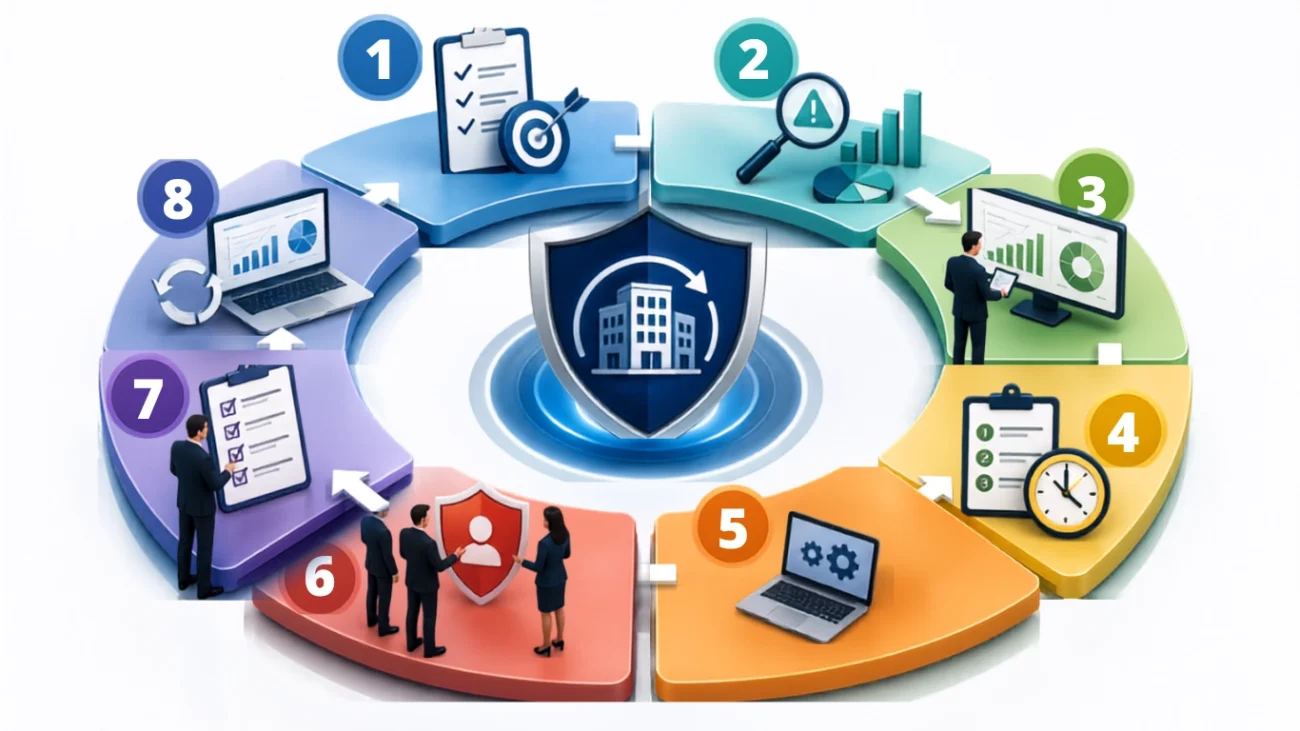
Steps to Build an Effective Business Continuity Strategy

Creating an effective plan requires careful planning and regular improvement.

1. Identify Critical Operations

To start, find out what services and processes are vital to the running of the business.

Consider which of your operations need to continue first and which can be done later.

2. Perform a Risk Assessment

Identify the threats that could affect your business.

Consider cyberattacks, IT failures, data loss, physical incidents, supply chain issues, and other relevant risks.

3. Conduct a Business Impact Analysis

Find out how disruptions will affect the operations of the business in an important way.

This demonstrates the systems, processes, and resources which require the highest protection.

4. Define Recovery Priorities

Recovery priorities should be set based on business needs.

Critical business systems require more rapid recovery of services when compared to non-critical systems.

5. Create Alternative Procedures

Identify practical ways to continue important operations when normal processes are unavailable.

Alternate methods could include remote processes, manual practices, and alternate or substitute technology.

6. Build a Disaster Recovery Plan

Document how critical IT systems, applications, and data will be restored.

Ensure the technical recovery strategy supports wider Business Continuity goals.

7. Assign Clear Responsibilities

Each critical activity must have an assigned owner.

Employees should have ownership of their responsibilities well in advance of an emergency.

8. Test the Plans

Plans fail if they have never been tested.

Exercising a plan helps in identifying gaps in the plan, outdated procedures and instructions, missing resources, ambiguous responsibilities, and the like.

9. Review and Update Regularly

Business requirements change over time.

New applications, employees, offices, cloud services, and cybersecurity risks may affect your Business Continuity requirements.

Plans should therefore be reviewed and updated regularly.

Common Business Continuity and Disaster Recovery Mistakes

Businesses often invest in technology but overlook planning and testing.

Here are some common mistakes to avoid:

Mistake

Having backups but no tested recovery plan

Focusing only on IT

Not identifying critical systems

Using outdated contact information

Never testing the plan

Ignoring cybersecurity

Not updating the plan

Potential Impact

Data may exist but recovery could take longer than expected

Employees and critical business processes may be overlooked

Recovery teams may restore low-priority systems first

Communication can fail during an emergency

Hidden weaknesses may only appear during a real incident

Cyber incidents can cause major operational disruption

The plan may not match the current business environment

A strong Business Continuity approach requires ongoing attention rather than creating a document once and forgetting about it.

How Technology Supports Business Continuity

Technology allows modern businesses to stay functional during a crisis.

The right IT strategy can support Business Continuity through reliable infrastructure, secure cloud services, remote access, monitoring, cybersecurity, and backup and recovery solutions. 

Important technologies may include:

  • Automated data backups
  • Cloud backup solutions
  • Disaster recovery platforms
  • Virtual servers
  • Remote access solutions
  • Secure cloud applications
  • Endpoint protection
  • Network security
  • Multi-factor authentication
  • System monitoring
  • Redundant infrastructure

Some solutions allow employees to use applications from remote locations via the cloud. Additionally, some solutions protect critical data via backup solutions, while others restore systems that have failed or even been affected by a cyber incident.

Technology is not the only answer, however. Developed solutions must be supplemented with planning and documented procedures, as well as employees who are aware of the planned solutions and drills that test every element of the solutions.

Business Continuity for UAE Businesses

Business Continuity for UAE Businesses

Digital infrastructure has become vital for businesses to manage their day-to-day operations.

Email systems, cloud applications, servers, networks, customer databases, ERP platforms, and cybersecurity tools are now essential to many organizations.

Businesses increasingly rely on real-time data and online services, so an outage can lead to severe disruption.

The negative impact on productivity, customer service, revenue, and reputation is usually significant. 

Businesses should evaluate their current IT environment and ask important questions:

  • Are our backups secure and regularly tested?
  • How quickly can we restore important data?
  • Can employees work if the main office is unavailable?
  • Do we have documented recovery procedures?
  • Has our Business Continuity plan been tested recently?

The answers can help identify weaknesses before a major disruption occurs.

Strengthen Your Business Continuity with Chipin corp

Unexpected disruptions can happen at any time, from cyberattacks and data loss to server failures and network outages. A strong Business Continuity strategy helps your business stay prepared, protect critical operations, and recover faster when problems occur.

At Chipin corp, we help businesses in Dubai and across the UAE strengthen their IT resilience with reliable solutions, including:

  • Data Backup & Recovery
  • Disaster Recovery Solutions
  • Managed IT Support
  • Cybersecurity Solutions
  • Server & Network Management
  • Cloud Solutions
  • IT Infrastructure Support

Don’t wait for an unexpected disruption to discover weaknesses in your IT environment.

Contact Chipin corp today to build a stronger Business Continuity strategy and keep your critical business operations protected.

Final Thoughts

The roles Business Continuity and Disaster Recovery play are different, though complementary. 

Business Continuity entails preserving the capability to carry on running the service or product your company is known for during and after a service disruption. Disaster recovery, on the other hand, is about restoring the technology, systems, applications, and data needed for the service after the disruption. One looks at the organization as a whole and the other looks at IT recovery. The most optimal approach is to combine both. 

A company may have a reasonable backup technology, but without a complete Business Continuity plan, employees may be unaware how to sustain vital operations during an extended disruption. Conversely, a company may have alternative work arrangements, but still may be unable to sustain operations if its critical IT systems are not restored. 

By identifying key processes, managing risk, protecting data, formulating recovery objectives, envisioning substitute processes, and planning for and executing frequent tests of recovery plans, organizations can strengthen their capacity to overcome disruptions. 

A well-conceived Business Continuity and Disaster Recovery strategy can protect critical information, shorten recovery time, and insulate a business from the impact of unpredictable situations.

 Professional support is available to help businesses strengthen IT resilience in key areas such as backup and recovery, cybersecurity, IT infrastructure, systems’ visibility and performance, and Disaster Recovery planning. Technological solutions combined with recovery planning can help protect critical business services and enable recovery from disruption in a timely manner. 

Frequently Asked Questions

Business Continuity focuses on maintaining critical business operations during and after a disruption, while disaster recovery focuses primarily on restoring affected IT systems, applications, infrastructure, and data.

Disaster recovery is generally considered an important component of a broader Business Continuity strategy because technology recovery supports the restoration of critical business operations.

Backups protect copies of data, but disaster recovery also requires clear procedures for restoring systems, applications, infrastructure, and business services within acceptable recovery targets.

Testing should be performed regularly and whenever major changes affect the business, such as new systems, locations, critical processes, or technology infrastructure.

RTO is the target time for restoring a system or service after an outage. RPO relates to the amount of data loss the business can potentially accept, helping determine backup and recovery requirements.

Yes. Small businesses can also experience cyberattacks, hardware failures, data loss, and unexpected outages. A plan should be scaled according to the organization's size, risks, critical operations, and available resources.