Blogs by Chipin

How to Choose a CCTV Camera Company in Dubai: A Buyer’s Guide

How to Choose a CCTV Camera Company in Dubai A Buyer's Guide

Choosing the right CCTV camera company in Dubai is about more than simply selecting the cheapest price quote. A reputable company will identify the security needs of your property, provide recommendations, ensure the Cameras and equipment are installed to comply with the Dubai Security regulations, and provide after-sales service support. If a Company provides and installs the right system, the customer will benefit from improved security and less frustration.

Many factors differentiate CCTV system offerings, including equipment, technology, and services. This makes price comparisons of offered packages and systems difficult. A CCTV system may include features such as remote monitoring, and integrated storage and maintenance services. Sometimes determining which system offerings represent the best value can be difficult.

This report describes the factors that should be considered prior to engaging a CCTV company to provide services and systems for properties in Dubai, including commercial buildings and residential properties.

Why Choosing the Right CCTV Company in Dubai Matters

The quality of a CCTV system depends on more than the camera itself. Proper camera placement, network configuration, storage, lighting conditions, installation quality, and ongoing maintenance all affect how useful your surveillance system will be. A professional CCTV company should consider these factors before recommending equipment.

A poorly planned system can leave important areas uncovered, produce unclear footage, or create unnecessary storage and maintenance costs. On the other hand, a properly designed CCTV security system can provide clear coverage of entrances, exits, reception areas, parking spaces, warehouses, corridors, and other important locations.

This is why businesses should evaluate the CCTV company in Dubai as carefully as they evaluate the cameras and recording equipment.

Start With a Proper Site Survey

A site survey helps a CCTV provider understand the property before recommending cameras. During the survey, the installer can identify entry points, blind spots, lighting conditions, cable routes, mounting locations, network requirements, and areas that need closer monitoring. This creates a more practical CCTV design instead of a standard package.

Be cautious if a company provides a quotation without asking about your property or security requirements. The number of cameras alone does not explain whether the system will provide useful coverage.

A proper site survey should consider:

  • Property size and layout
  • Entry and exit points
  • Indoor and outdoor areas
  • Parking and loading areas
  • Lighting conditions
  • Potential blind spots
  • Camera mounting height
  • Network and power requirements
  • Recording and storage needs
  • Future expansion requirements

For commercial properties, the survey should also consider how employees, visitors, customers, vehicles, and deliveries move through the premises.

Check the CCTV Company's Dubai Compliance and SIRA Knowledge

Check the CCTV Company's Dubai Compliance and SIRA Knowledge

For CCTV projects in Dubai, compliance should come up from the very first conversation. The Security Industry Regulatory Agency (SIRA) publishes technical and security requirements for surveillance systems, and it handles security plans, system certification, and approved security equipment. Your provider should be able to explain which of those requirements apply to your project.

Don’t just accept “SIRA approved” as an answer. Ask what it actually means for your installation.

SIRA’s technical specifications cover cameras, outdoor protection, image quality, lighting, and more. For example, they state that outdoor cameras should have at least IP66 protection, or an equivalent housing suited to Gulf conditions.

Before hiring a provider, ask:

  • Does your team understand the applicable SIRA requirements?
  • Will the security plan require approval?
  • Are the proposed devices suitable for the project?
  • Who handles the required documentation?
  • What happens if the installation requires modifications after inspection?

This can help avoid compliance-related problems later.

Choose the Right Camera Type and Look Beyond Resolution

There is no single CCTV camera that is ideal for every location. The right choice depends on what you need to monitor, the distance involved, lighting conditions, indoor or outdoor use, and the level of detail required. A professional CCTV installer should recommend cameras based on the scene rather than simply offering the highest resolution.

Common camera types include:

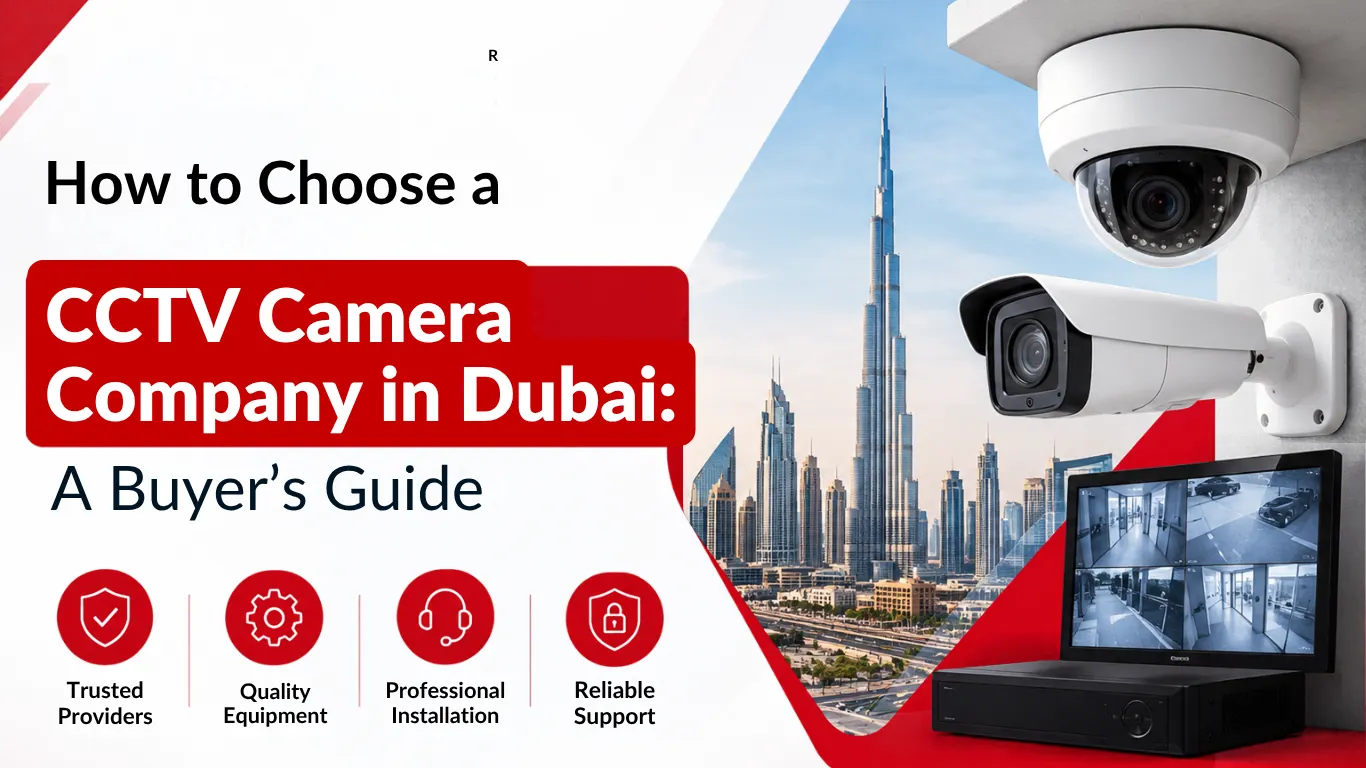
Dome Cameras

Dome cameras are commonly used indoors and can work well in offices, retail spaces, reception areas, and corridors. Their compact design can make them suitable for locations where a less noticeable installation is preferred.

Bullet Cameras

Bullet cameras are often used for outdoor or perimeter monitoring. Their design can make them useful for entrances, building exteriors, parking areas, and other locations where a more visible camera is suitable.

PTZ Cameras

PTZ cameras can pan, tilt, and zoom remotely. They may be useful for larger areas where operators need the ability to change the viewing direction or zoom into specific areas.

IP Cameras

IP cameras transmit video over a network and can support higher-resolution surveillance, remote access, analytics, and integration with other networked security equipment.

But choosing the right type is only half the decision. Higher resolution can provide more image detail, but resolution alone does not guarantee useful footage. Lighting, lens selection, camera positioning, viewing distance, image processing, and the purpose of the camera all affect the final result. A good CCTV provider should match camera specifications to the actual scene rather than simply recommending the same model with the highest megapixel count.

For example, a camera facing strong sunlight may need suitable wide dynamic range capabilities. A camera installed outdoors may require appropriate weather protection. A camera monitoring a doorway may need a different lens and positioning strategy from one covering a large parking area.

Ask the provider:

  • What camera type and area coverage suits this location?
  • What level of detail should I expect?
  • How will it perform at night?
  • How will it handle bright sunlight?
  • What lens is being used?
  • Is the camera suitable for outdoor conditions?

The right CCTV installation company should explain why a particular camera type and specification combination is suitable — not just recommend the same setup for every location.

Compare Storage and Recording Options

Storage is one of the most important parts of a CCTV system because a camera is only useful if the required footage can be recorded and retrieved when needed. Storage requirements depend on factors such as the number of cameras, resolution, frame rate, recording mode, compression, and required retention period.

A professional provider should explain how much storage your system needs rather than simply adding a hard drive to the quotation.

Ask about:

  • NVR or DVR capacity
  • Number of recording channels
  • Hard drive type and capacity
  • Continuous or motion-based recording
  • Expected recording retention
  • Backup requirements
  • Video export options
  • Storage expansion possibilities

For a business, it is also important to understand who can access recorded footage and how administrator credentials are managed.

Consider Remote CCTV Monitoring and Mobile Access

Remote access is a feature of many modern CCTV systems. It allows users to view active cameras and/or access stored video files from any device that is on a secure network. From a business management perspective, this means you can view your CCTV system from almost anywhere.

Of course, remote access to your company’s security system means that usernames, passwords, and other means of limiting and controlling access must also be secured. You should ensure your CCTV service provider has controls in place to secure and limit system access.

Before choosing a provider, ask whether the proposed system supports:

  • Secure remote viewing
  • Mobile application access
  • Multiple authorised users
  • User permissions
  • Remote playback
  • Video export
  • System notifications or alerts

Remote access should add convenience without compromising the security of the surveillance system itself.

Check the Installation Quality and Cabling

Even good CCTV equipment can perform poorly if it is installed incorrectly. Cable quality, routing, connectors, mounting, power supply, network configuration, and weather protection all contribute to system reliability. Your CCTV installation company should explain how cables will be routed and how outdoor connections will be protected.

For a business environment, professional installation should also keep cabling organised and accessible for future maintenance.

Ask whether the quotation includes:

  • CCTV cabling
  • Cable management
  • Network switches where required
  • Power requirements
  • Camera mounting
  • NVR/DVR installation
  • Configuration
  • Testing
  • Final handover

Do not compare quotations only by camera quantity and price. Two companies may quote the same number of cameras but provide very different installation standards.

Ask About CCTV Maintenance and After-Sales Support

Installing the cameras is only the start. Give it a few months and something will act up: a camera drops offline, a hard drive gives out, a cable gets chewed through or knocked loose, or the firmware needs an update. That’s normal.

What matters is whether anyone picks up the phone when it happens. Some installers vanish the day they get paid, and you find that out at the worst possible time, usually when you’re trying to pull footage after an incident.

So ask before you sign. What does the warranty really cover, and does it include labour or just the parts? If a camera dies, do they replace it or make you wait? Can they fix small issues remotely, or does someone have to visit every time? And how fast do they actually respond? A “within 24 hours” promise on paper means little if nobody follows through.

It also helps to ask if they offer regular check-ups. If your business relies on its cameras, a maintenance agreement is usually worth it, because a quick monthly health check can spot a failing drive or a dead camera long before you’d notice yourself.

Compare CCTV Brands and Equipment Carefully

How to Choose the Right CCTV Camera Company in Dubai

The brand name matters, but it should not be the only factor in your decision. Different CCTV brands and product ranges offer different features, compatibility, analytics, storage options, warranties, and price points. A professional provider should recommend equipment based on your requirements rather than forcing one brand into every project.

When comparing brands, consider:

  • Image quality
  • Night vision performance
  • Available camera types
  • NVR compatibility
  • Analytics features
  • Mobile access
  • Warranty
  • Product availability
  • Long-term support
  • Compatibility with your existing system

Also ask whether the equipment being quoted is genuine and supported through appropriate distribution channels.

Read the CCTV Quotation Carefully

A good quote makes comparing CCTV companies in Dubai a lot easier. A bad one just says “8 cameras + installation” and leaves you guessing. If that’s all you’re getting, ask for more. You want to see exactly what’s being supplied, what the installation covers, and what’s left out.

Look for the camera models and quantities, plus the NVR or DVR model and the storage capacity. It should also mention the type and rough length of cable, any network equipment, and separate charges for installation and configuration. Check the warranty and maintenance terms too, and whether any compliance work is included. Most important of all, look for exclusions and extra charges, because that’s where surprise costs usually hide.

A detailed quote protects both sides. You know what you’re paying for, and the installer knows what’s expected, so there are no arguments halfway through the job.

Do Not Choose a CCTV Company Based Only on Price

Price is important, but the cheapest CCTV quotation is not necessarily the most cost-effective option. A low initial price may exclude cabling, storage, configuration, maintenance, or other components that you later need to purchase separately. Comparing the complete system and service scope gives you a more realistic picture of the total cost.

Instead of asking only, “How much does CCTV installation cost in Dubai?”, ask:

What exactly am I getting for the quoted price?

Compare the complete solution, including equipment, installation, storage, warranty, support, and future maintenance.

A slightly different quotation can represent a major difference in equipment quality or installation scope, so make sure you are comparing similar specifications.

Check Experience With Similar Properties

A company that does great office installs may have never worked on a warehouse, a retail store, a villa, a school, or a large commercial building. Each one comes with its own problems, so ask about projects that look like yours.

Take a warehouse, for example. It usually needs long-distance coverage, cameras watching the loading area, and a few solid outdoor units. An office is the opposite: you’re mostly worried about indoor coverage around the entrance, reception, corridors, and any restricted rooms.

So ask them straight out if they’ve worked on similar properties, and how they’d cover your site. Find out if they’ll give you a camera layout before the work starts, and who will actually do the installation, their own team or a subcontractor. Ask about testing and handover documentation too.

Someone who has done this kind of job before will already know the practical problems, like awkward cable routes or a loading bay that goes dark at night, and can plan around them before the first camera goes up.

Make Sure the System Is Tested Before Handover

Cameras on the wall doesn’t mean the job is finished. Before they hand anything over, a proper CCTV company should test the whole system: the cameras, the recorder, the network, the storage, remote access, and any other features they’ve set up.

Don’t be shy about checking things yourself at handover. Go through the cameras one by one and make sure each shows the right view, not pointed slightly off or half blocked by a pillar. Recording should actually be working, not just switched on, so ask them to play some back and make sure it runs smoothly.

Look at the date and time too, because wrong timestamps can cause real trouble when you need footage for an incident. If night vision matters in certain spots, check it there once it gets dark, and if remote access is part of the package, log in from your own phone and see it work. Make sure every user can get in with the right level of access, try exporting a clip to be sure that it works, and get the admin login details handed over properly, not just sent in a casual text.

SIRA’s guidance also covers practical points like keeping the system time accurate, making sure everything works as it should, and how recorded footage gets copied and handled.

A proper handover means your team can trust the system from day one, instead of finding out it’s half-working the first time someone needs the footage.

Questions to Ask Before Hiring a CCTV Company in Dubai

Before you sign an installation contract, ask about the provider’s experience, system design, compliance knowledge, equipment, storage, installation, warranty, and support. Their answers will show whether you’re getting a complete surveillance solution or just a box of cameras. 

Here are some useful questions to ask:

  • Will you conduct a site survey before providing the final quotation?
  • Which cameras do you recommend and why?
  • How will you eliminate blind spots?
  • What recording and storage capacity will I receive?
  • How long will footage be retained?
  • What type of cabling will you use?
  • How will remote access be secured?
  • What warranty is included?
  • Do you provide CCTV maintenance?
  • What support is available after installation?
  • How will applicable SIRA requirements be handled?
  • What documentation will I receive at handover?

A professional provider should be comfortable answering these questions clearly.

How to Choose the Right CCTV Camera Company in Dubai

How to Choose the Right CCTV Camera Company in Dubai

The right company gives you more than cameras and a ladder. Look for one that starts with a site survey, takes the time to understand what you’re trying to protect, and recommends equipment that fits your site. They should also know Dubai’s requirements, give you a detailed quote, install everything properly, and still be around when you need maintenance or support.

When you’re comparing providers, start with how they handle the survey and system design, and whether they’ve done similar installations before. Check how well they know SIRA and compliance, and what camera and recording technology they’re offering.

Then look at the quality of their installation and cabling, how carefully they’ve planned the storage, and how they’ll keep remote access secure. Finally, look at the warranty, the maintenance terms, and the after-sales support, and weigh all of that against overall value, not just the price at the bottom.

In the end, the goal isn’t to put up as many cameras as possible. It’s to end up with a system that covers the right spots, records reliably, and is easy to manage for years to come.

Final Thoughts

Not all CCTV companies in Dubai are the same, and honestly, the cheapest quote isn’t always the best deal. What actually matters is how the system is planned, installed, set up securely, tested properly, and supported afterward — skip any of that, and you could end up with cameras that look fine on paper but don’t actually cover you when something happens.

So before you commit to anyone — whether it’s for an office, a retail shop, a warehouse, a villa, or a full commercial building — it’s worth slowing down a bit. Ask them to actually come and survey the site instead of just emailing you a price list. Get quotes you can compare properly, not just a number at the bottom.

Ask what cameras and equipment they’re planning to use, whether it fits what’s actually required for your type of space, and — just as important — what happens after installation if something goes wrong.

At the end of the day, a good CCTV setup isn’t just about having cameras up. It’s about actually being able to see what’s going on, and knowing your people, your assets, and your operations are covered. That only really works out if you’ve picked the right team to install it in the first place.

If you’re in the market for CCTV in Dubai, check out our CCTV Security Solutions — happy to walk you through how a properly planned system can work for your business.

Looking for a Reliable CCTV Company in Dubai?

Protect your business with a professionally designed CCTV system from Chipin Corp. From site assessment and camera selection to installation, configuration, remote monitoring, and ongoing maintenance, we provide complete CCTV security solutions tailored to your business needs.

Get Your CCTV Security Solution Today → Contact Chipin Corp

Frequently Asked Questions

Check the company's site survey process, installation experience, equipment quality, storage planning, applicable SIRA requirements, warranty, maintenance, and after-sales support. A detailed quotation and clear camera layout can also help you compare providers more accurately.

SIRA regulates security systems in Dubai and publishes technical requirements for surveillance systems. Depending on the property and project, security plans, system certification, approved equipment, and other requirements may apply. Your CCTV provider should explain the requirements relevant to your installation.

The number depends on the property's layout, entrances, exits, blind spots, parking areas, internal spaces, and required level of monitoring. A proper site survey is a better way to determine camera quantity than choosing a standard package based only on the size of the business.

IP cameras can be suitable for many businesses because they operate over networks and can support features such as high-resolution video, remote access, analytics, and network-based management. The correct choice still depends on the property's requirements, network infrastructure, budget, and security objectives.

There is no single maintenance schedule suitable for every property. Businesses should regularly check camera views, recording, storage, network connections, and system health. A professional maintenance plan can help identify cameras or recording equipment that are not operating correctly.

A detailed quotation should identify camera models and quantities, recording equipment, storage, cabling, installation, configuration, warranty, maintenance, and any exclusions. Comparing complete quotations rather than only the total price helps businesses understand what they are actually receiving.

Many modern CCTV systems support remote viewing through approved applications or network access. However, remote access should be configured securely with appropriate user accounts, passwords, permissions, and network controls. Ask your installer how remote access will be secured before enabling it.

About the Author