When a company expands, its tech requirements become more advanced & Important. For example a small office may start out with just a few computers and a basic internet connection for access to shared files. But when the team grows, the business needs dependable networks, secure data storage, reliable servers, and systems that help to manage daily activities without unnecessary interruptions.
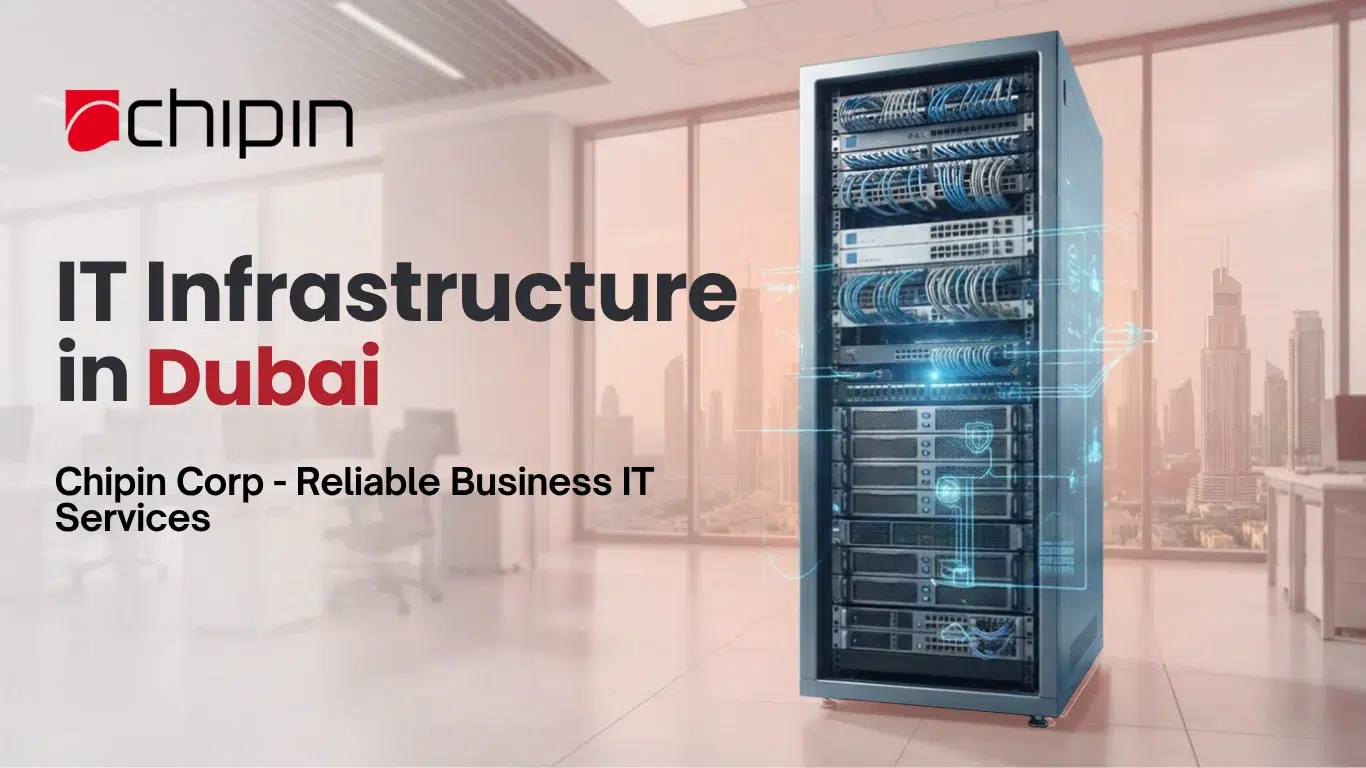
Having the right IT infrastructure in Dubai for businesses is crucial & Important for protecting business information, ensuring long-term business growth, and maintaining productivity. Old hardware and poorly managed systems can affect the employees and lead to delays in customer service and increase unnecessary costs. Establishing a reliable IT environment is more than just the hardware. A practical plan for technology is also needed to evaluate the current situation, consider threats to security, plan for future business expansion, and consider ongoing maintenance costs.
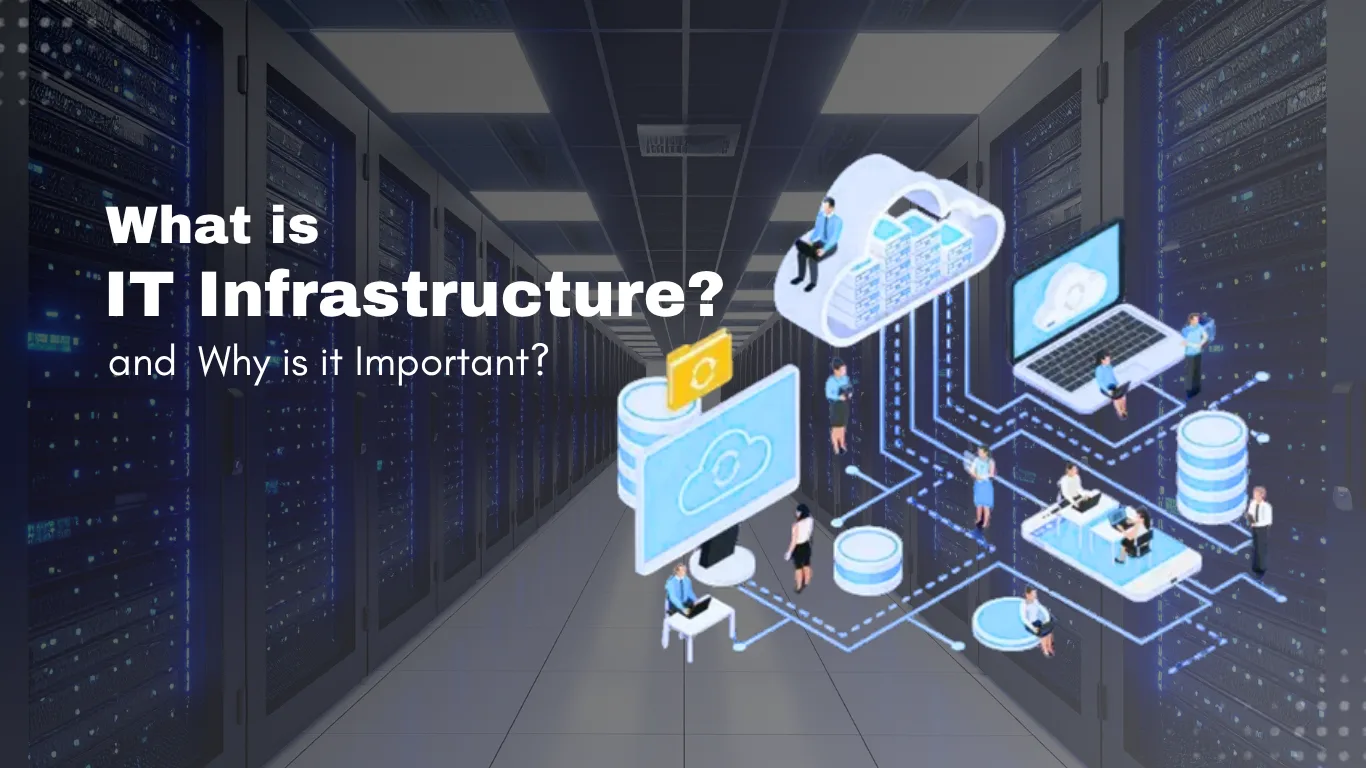
What is IT Infrastructure and Why is it Important?
IT Infrastructure includes all the hardware, software, networks, servers, cloud, and security systems that enable a business to function. The different components of the infrastructure allow the business to manage data, ease communication, and enable employees to perform daily activities and access needed applications to do their work. The right IT infrastructure helps employees be productive while giving management better control and visibility into how the business is spending on technology, and how to secure business information. The goal for any growing business should be to create a flexible, secure and reliable IT environment that can be extended to support additional employees and business locations.
1. Evaluate Your IT Requirements
- You need to know exactly what your business requirements are? before spending money on new technology. Look at the number of employees, computers, servers, network devices, business applications and storage.
- It’s also important to look at the issues your current technology isn’t able to address. These can include performance issues (slow internet connectivity, system failures), or the inability to access shared files.
- You also need to look at the direction your business is heading. For example, a business is planning to significantly grow its workforce may require a different IT infrastructure, compared to one who is planning to keep its employee headcount steady.
- Doing a thorough assessment helps businesses to address their pain points and prioritize technology upgrades, instead of spending money on technology they don’t really need.
2. Establish a Secure Business Network
- The network connects employees, devices and applications. Lack of the network can significantly impact the productivity of a business.
- The network devices and infrastructure should provide good enough capacity to sufficiently and securely support the connectivity and communication for the employees and/or devices of the business.
- For a business with multiple departments or multiple locations, the network can be logically and securely separated to protect and segment the sensitive data and systems of the business.
- Prioritizing and using the available resources of the network can help identify connectivity and performance issues before they impact the employees of the business.
- Businesses can benefit from the use of professional services to determine and plan for the IT needs to efficiently support the day-to-day operations of the business and sustain the potential growth of the business.
3. Choose the Right Server and Cloud Solutions
- Servers can be located either on-site (on-premises) or off-site (off-premises, e.g. in the cloud).
- On-premises servers allow companies to keep their data and IT systems under complete control. However, there are significant costs associated with on-premises solutions because companies are also responsible for providing maintenance, security and backup solutions.
- Cloud solutions enable more flexibility, remote access and easier scale (e.g. elastic compute). However, businesses should pay attention to access control, subscription costs and data security.
- The best choice depends on the company’s application, budget, security and operational needs.
- Before choosing a solution, companies should determine which workloads they want to execute in a server or cloud environment. Support for servers and the cloud should ensure the performance of the systems and reduce problems caused by misconfigurations.
4. Integrate Cybersecurity into Your IT Planning
- Every single component of a business’s IT infrastructure can have an impact on cybersecurity. Email accounts, company devices, shared files and documents, and business systems all have the potential to introduce risks to the business.
- A robust control, e.g. two-step verification, should be implemented for all business email accounts and applications. Endpoint protection and security updates should be implemented in a timely manner. Email and web protection, as well as awareness training for employees can also help to reduce risk.
- Wherever possible, the principle of least privilege should be applied, e.g. by restricting access to company systems only to those employees who need it to perform their jobs.
- Combining these measures with a cybersecurity risk management framework helps companies to gain more control over security risks.
5. Protect Business Data with Regular Backups
- It is important to have a plan to protect important business data. Losing access to important data can happen due to hardware malfunctions, power outages, employee mistakes, cyberattacks and other unexpected events. If important data is not backed up, restoring it can be very difficult and costly.
- Each business should define its important data and create a plan to back it up and recover it in a timely manner.
- It is important to protect backups from unauthorized access and, if possible, keep backups in a different location than the data being backed up. Restoration of the backups should be tested to make sure that they are recoverable.
- Disaster recovery plans help document procedures to restore important data and services for employees.
6. Plan for Growth and Future Technology Needs
- A business’s IT infrastructure should grow alongside the company, rather than become a limitation when new opportunities arise.
For example, imagine a Dubai-based trading company that starts with 15 employees and later expands to 40 employees while opening a second office in Abu Dhabi. If its network, server capacity, software licences, and security systems were designed only for the original team, employees may experience slow connectivity, limited system access, and difficulties sharing files between offices. - To avoid these problems, businesses should choose scalable IT Services in Dubai that can accommodate additional users, devices, and locations without requiring a complete infrastructure upgrade. Maintaining an inventory of computers, servers, network devices, and software licences also helps identify when additional capacity or upgrades are needed.
- It is equally important to check whether new software works with existing systems and whether employees can access company resources securely when working remotely.
- Planning ahead helps businesses control IT costs, reduce operational disruptions, and avoid unnecessary upgrades. Working with an experienced IT partner like Chipin Corp can help organizations assess their current infrastructure, identify future requirements, and choose practical solutions that support long-term business growth.
7. Invest in Best Ongoing IT Maintenance and Support
- All IT infrastructure requires maintenance and support to function properly over a long-term basis. Resolving support tickets, maintaining and monitoring IT equipment, security and network reviews all require ongoing efforts to meet the demands of the users and retain reliability.
- Maintenance agreements help to resolve small IT issues and prevent large ones from occurring. Without a maintenance agreement, the small issues go unresolved until they begin to impact the business. Unexpected repairs make budgeting difficult
- Annual maintenance contracts and managed IT services help to address a company’s needs based on their level of support. Some of these contracts may include preventive maintenance, proactive support for infrastructure, servers, networks and applications, as well as troubleshooting and support services.
- The key is to have well-defined standards for what constitutes service, how quickly support is provided, who is responsible, and how progress is communicated.
How Chipin Corp Can Help You?
Chipin Corp delivers a range of IT support, security and hosting services in Dubai and across the UAE to ensure your IT infrastructure is secured and always available. Some of the services we provide include: managed IT services, AMC for IT, server and networking, cyber security, and cloud hosting. These services enable organizations to run their IT operations and services efficiently while keeping their infrastructure up to date to support changing business needs.
The best approach will vary based on your existing business and IT infrastructure, the size of your business, security needs, and growth and expansion goals. Practical improvements can be recommended based on an assessment of your needs.
If your organization is planning an IT infrastructure upgrade and is looking to resolve persistent IT-related challenges, it is worthwhile to have your systems reviewed to determine the cause of your challenges before making additional investments in new IT hardware.
Frequently Asked Questions
Conclusion
IT infrastructure is one of the essential components of running a business. Reliable networks and secure and accessible data are the foundations on which businesses are built to operate productively and continue to do so. For businesses in Dubai looking to grow and expand, it is important to address security concerns early and review your business’s IT needs and requirements as the organization evolves. Prior planning and the right IT support can help businesses avoid disruptions and build systems prepared to meet the demands of future growth.
Need help planning your business IT infrastructure? Visit Chipin Corp to explore its IT support and infrastructure services and discuss your requirements with the team.
About the Author