Blogs by Chipin

AI-Powered Cybersecurity: The Future of Business Protection

AI-Powered Cybersecurity

Cyber threats are more advanced than ever. Malware and spam are no longer the biggest concern for the average business. Now, threats come from ransomware, AI tools to craft phishing messages, credential harvesting attacks, and zero-day attacks.

This is all happening while businesses continue their digital transformation. Employees are remote, data is stored in the cloud, and applications are accessible anywhere. This all increases productivity, but allows even greater opportunities for cybercriminals. 

Traditional cyber defenses are still essential, but are outdated almost the moment they are deployed. Security teams know that compromises are happening, but with the multitude of alerts, they can only focus on the worst issues without the ability to respond.

Artificial Intelligence has changed the rules of cybersecurity. 

Suspicious behavior can be detected and AI can analyze millions of attack vectors in a matter of seconds and respond before the threat spreads across the network. 

Startups, SMEs, and even large enterprises know one of the greatest cyber threat mitigators is the advanced tools of AI.

Why Businesses Need AI-Powered Cybersecurity

The past few years have changed how people use technology to run a business. Reliance on remote employees and connected systems has moved many businesses to using the cloud or other mobile computing solutions for everyday operations. The new ways of doing business are even faster, but the number of ways to attack businesses has multiplied.

Traditional antivirus solutions primarily focus on finding malware, but cybercriminals are always one step ahead. They find ways to modify attacks so that they are not detected by antivirus solutions.

Cybersecurity solutions are no longer able to rely on the traditional method of detecting attacks using signatures. Instead, the focus of many solutions is the identification of attacks based on behavior.

Some of today’s most common cyber risks include:

  • Ransomware attacks
  • AI-generated phishing emails
  • Insider threats
  • Credential theft
  • Business Email Compromise (BEC)
  • Zero-day vulnerabilities
  • Cloud account hijacking
  • Supply chain attacks

Artificial Intelligence continuously analyzes user behavior, network activity, login patterns, and device performance to identify unusual activities before they become security incidents.

Instead of asking,

“Has this malware been seen before?”

AI asks,

“Does this behavior look suspicious?”

That small difference allows organizations to stop many attacks before they cause damage.

AI vs Traditional Cybersecurity

Traditional Cybersecurity

Detects known malware

Signature-based detection

Mostly reactive

Manual investigation

Slower incident response

High false positives

Limited automation

AI-Powered Cybersecurity

Detects known and unknown threats

Behavior-based detection

Predictive and proactive

Automated analysis

Real-time threat response

More accurate threat detection

Continuous learning and automation

As cyber threats become more sophisticated, businesses require security solutions that evolve continuously rather than relying solely on predefined rules.

What is AI-Powered Cybersecurity?

What is AI-Powered Cybersecurity

AI-powered cybersecurity uses the combination of Artificial Intelligence, Machine Learning (ML), and behavior analytics in an automated environment to identify, mitigate, and remediate cyber threats without a high requirement for human oversight.

Traditional security software focuses on signature-based detection of threats. AI security tools, on the other hand, analyze and learn from the high volumes of data in the IT environment of the organization.

These systems monitor:

  • Network traffic
  • User behavior
  • Login activities
  • Endpoint devices
  • Email communications
  • Cloud applications
  • Historical attack patterns
  • Global threat intelligence

If there is ever anything that the AI system deems to be suspicious, it will either notify security personnel or take action automatically to stop the threats from cyber attackers from being worse.

Did You Know?
Modern AI security systems are capable of handling millions of security events every second.This capability also speeds up the response time overall and helps prepare a business for a stronger threat.

Why Businesses Are Investing in AI Security

The financial burden of cyberattacks is steep. However, there are other costs associated with cyberattacks. 

There is operational downtime, legal issues, and loss of trust. Reputation damage is a given. All of this contributes to a loss of customers.

AI is a valuable investment for businesses, as AI has the potential to deter/counter threats before they occur. 

Key Benefits of AI-Powered Cybersecurity :-

✔ Faster threat detection

✔ 24/7 continuous monitoring

✔ Reduced human error

✔ Smarter phishing protection

✔ Better ransomware defense

✔ Automated incident response

✔ Improved cloud security

✔ Faster vulnerability detection

✔ Insider threat identification

✔ Enhanced compliance management

The intrusion of AI into cybersecurity allows teams to more easily defend against threats, as AI is able to determine more accurately which alerts command a response. Leaders are able to determine which threats to focus on and which alerts to ignore. 

Real-World Example

Let’s say your employee gets a seemingly important invoice from a supplier they know and trust.

With traditional security methods, the email will likely not be flagged in the spam filter as it looks to be a legitimate request.

An AI-centric cybersecurity system will examine and measure a whole range of factors, such as the author’s writing style, the reputation of the sender, the behavioral profile of the attachments, as well as user interaction, and will identify the request as suspicious well before the employee clicks on the request.

Compared to traditional security measures that are usually put in place after the fact, AI is used to stop the breach before it becomes a reality.

Latest AI Cybersecurity Trends in 2026

Latest AI Cybersecurity Trends in 2026

AI is set to dominate defense systems. Supporting and enhancing cybersecurity is only part of its future. The move by many business organizations to adopt the use of the cloud, hybrid work models, and AI-connected devices to work has led cybercriminals to also adopt AI to launch even more aggressive and sophisticated cyberattacks.

This has caused many organizations to invest heavily in advanced AI-powered cybersecurity technology. Such technology is capable of processing huge volumes of security-related data and identifying strange and abnormal security behaviors and threats.

The following are the most important Cybersecurity trends that will impact major enterprises in 2026.

Top AI Cybersecurity Trends Businesses Should Watch

AI Trend

AI-Powered Threat Detection

Generative AI Security

Zero Trust Security

AI Email Protection

AI Cloud Security

Endpoint AI Security

Predictive Threat Intelligence

Why It Matters

Identifies suspicious activities in real time

Detects AI-generated phishing and scams

Verifies every user and device continuously

Blocks phishing before users interact

Protects cloud workloads and applications

Secures laptops, servers, and mobile devices

Helps stop attacks before they happen

AI is Now Fighting AI

Using AI, cybercriminals are enhancing attacks. Phishing emails, password attacks, deepfakes, and other forms of attacks can be done with AI. Cybercriminals can do this much faster when scanning for attacks and other forms of cybercrime.

As with most kinds of crime, some AI technology is being used by cybercriminals, but like most other technologies, it is being used in its defense.

With AI, cybersecurity can be done faster and in real time. AI enabled cybersecurity can even find abnormal activity and find potential threats before attacks are realized.

The Future of Cybersecurity

The cyber attacks of the future will not only be achieved by humans, but will be largely defended with the assistance of AI. The same approach will be used for the defense of cybersecurity in order to eliminate the threat of AI-based cyber attacks.

How AI Protects Businesses from Modern Cyber Threats

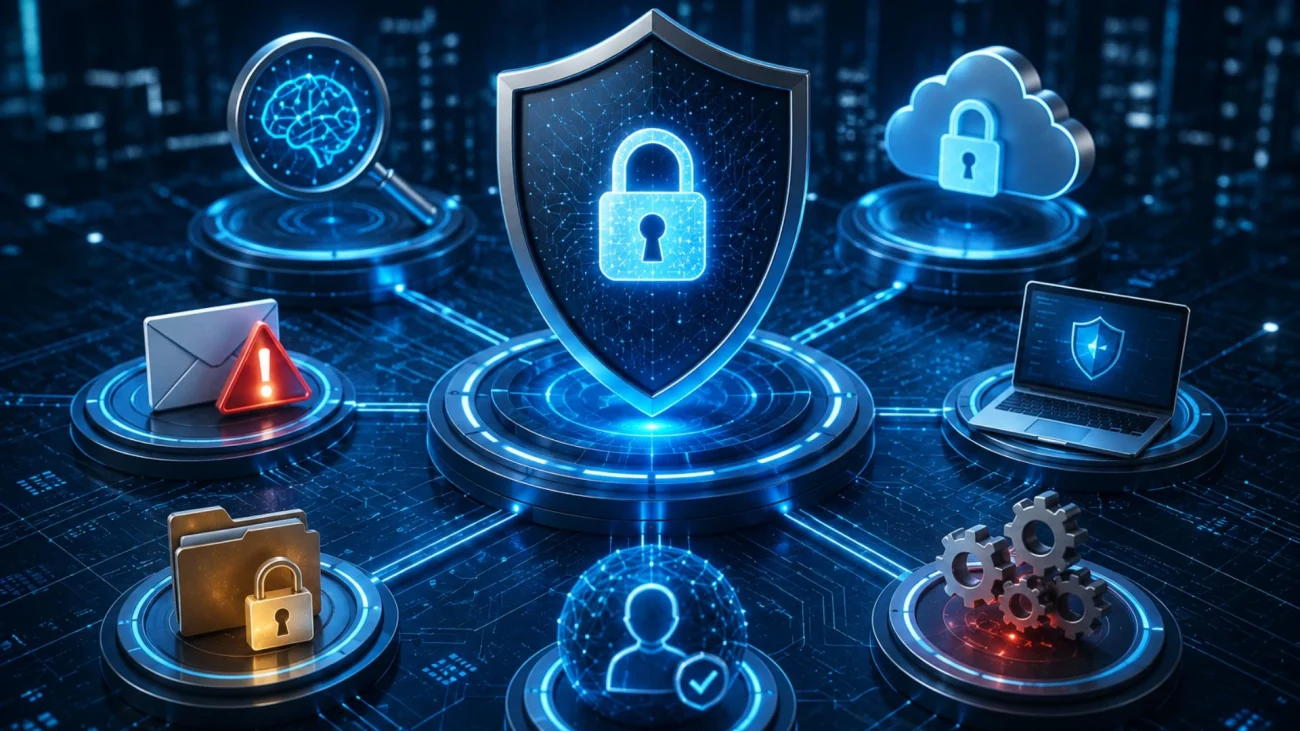
Artificial Intelligence works across multiple layers of an organization’s IT infrastructure. Instead of focusing on a single type of attack, AI continuously analyzes users, devices, applications, and networks to identify suspicious activities.

AI-Powered Threat Detection

To detect anomalous behavior, AI is very helpful.

Let’s take an example in which a hypothetical employee logs on from an unauthorized foreign IP address, downloads a large quantity of files and tries to access restricted systems. In this case the AI can assume that this behavior is suspicious.

Signature-based detection systems are more rigid. They wait until malware signatures are discovered. AI detects behavior that doesn’t map to business activity.

It helps detect:

  • Zero-day attacks
  • Insider threats
  • Credential theft
  • Account compromise
  • Suspicious file transfers
  • Unauthorized access attempts

Because AI continuously learns from previous attacks, it becomes more effective over time.

AI for Ransomware Protection

Among the various cybersecurity threats to companies globally, ransomware is at the top. It has the potential to paralyze business operations and cause serious and lasting financial damage.

AI lessens the threat to companies. It is capable of monitoring business files and spotting dubious behaviors related to unusual file encryption.

When suspicious activity is detected, AI can:

  • Stop malicious processes
  • Isolate infected devices
  • Alert security teams immediately
  • Prevent ransomware from spreading across the network
  • Assist with rapid recovery using secure backups

This proactive approach significantly reduces downtime and limits the overall impact of an attack.

AI in Email Security

Cyberattacks enter most commonly through email. Most commonly, attacks happen via phishing at this entry point. The success of phishing attacks is strongly attributed to the fraudulent emails looking realistic due to the aid of AI. 

AI-powered email security examines multiple factors before allowing a message into an inbox, including:

  • Sender reputation
  • Writing style
  • Domain authenticity
  • Suspicious links
  • Attachments
  • User interaction patterns

AI has the ability to analyze phishing emails beyond spam filters by looking at these aspects and patterns as a whole. 

AI in Endpoint Security

With the proliferation of remote work, the business network has become accessible from multiple locations and on multiple devices. Every device connected to the network can be targeted.

The use of AI for Endpoint Detection and Response (EDR) is designed to monitor network endpoints and address issues as they arise.

It can detect:

  • Malware infections
  • Unauthorized software
  • Privilege escalation
  • Data theft attempts
  • Suspicious applications
  • Device compromise

Unlike traditional antivirus software, AI can detect new threats even if they have never been seen before.

AI in Cloud Security

Cloud computing has made a big impact on the modern business sector. However, the evolution of cloud computing has also brought new issues surrounding safety and security. 

Organizations now store sensitive business information across services such as:

  • Microsoft 365
  • Microsoft Azure
  • Amazon Web Services (AWS)
  • Google Cloud
  • Salesforce

AI provides better and more efficient security for users in the cloud by keeping a constant watch on all cloud activities. 

Some of its capabilities include:

  • Detecting suspicious login attempts
  • Identifying risky user behavior
  • Monitoring cloud workloads
  • Protecting sensitive business data
  • Preventing unauthorized access
  • Detecting compromised accounts

In the business sector, the movement to the cloud for operations is increasing. Due to this movement, AI-advanced security systems that allow constant monitoring are becoming even more critical.

AI and Zero Trust Security

Adopting the Zero Trust security model is becoming more commonplace. It entails one straightforward concept:

Always verify instead of trusting.

Whereas organizations would once assume that a user was trustworthy after logging in, AI continuously monitors the user’s session behavior.

It considers factors such as:

  • Device health
  • Login location
  • Time of access
  • User behavior
  • Requested resources
  • Overall risk score

When the AI sees something unusual, it does not have to wait for a person to step in; it can close the user’s access on its own.

This model works better for different organizations by addressing theft of employees’ credentials, closing the vulnerability of remote employees, and limiting potential risks from employees.

Industries Benefiting from AI Cybersecurity

Every business now relies on a digital framework, which means every business requires a form of cybersecurity.

Industry

Healthcare

Banking & Finance

Retail & E-commerce

Manufacturing

Education

Government

Logistics

Professional Services

How AI Improves Security

Protects patient records and connected medical devices

Detects fraud and prevents account takeovers

Secures payment systems and customer data

Protects operational technology & production networks

Secures student information & online learning platforms

Safeguards critical infrastructure and public services

Monitors connected supply chain systems

Protects confidential business and client information


Regardless of industry, organizations that adopt AI-powered cybersecurity gain better visibility into their security environment while improving their ability to detect and respond to threats quickly.

The Future of AI-Powered Cybersecurity

The Future of AI Powered Cybersecurity

Cybersecurity is currently one of the most rapidly transforming industries. AI empowers companies to shift from a defense model that fortifies systems after attacks to a protection model that enables organizations to safeguard systems in a more proactive manner.

The development of technologies like cloud computing, IoT, hybrid work, and digital transformation means cyber threats will become more advanced. Companies using AI-powered cybersecurity will be better able to safeguard their businesses.

In the coming years, AI will play a major role in:

  • Predicting cyberattacks before they happen
  • Automating threat detection and response
  • Improving identity and access management
  • Strengthening cloud security
  • Enhancing compliance monitoring
  • Reducing manual security workloads
  • Detecting insider threats more accurately

Rather than getting rid of those working in the cybersecurity industry, AI will work alongside them and help make quicker and better decisions. 

Challenges and Limitations of AI in Cybersecurity

Although AI offers powerful security capabilities, it isn’t a complete solution on its own. Businesses should understand its limitations while developing a balanced cybersecurity strategy.

1. AI Requires Quality Data

AI systems learn by analyzing data. If the data is incomplete or inaccurate, detection results may also become less reliable.

2. False Positives

Occasionally, AI may identify legitimate user activity as suspicious. Proper configuration and continuous learning help minimize unnecessary alerts.

3. Human Expertise Is Still Essential

AI can automate repetitive security tasks, but experienced cybersecurity professionals are still needed to:

  • Investigate incidents
  • Develop security policies
  • Respond to complex attacks
  • Meet regulatory requirements
  • Improve overall security strategies

4. AI Is Also Used by Cybercriminals

Hackers are beginning to use AI for:

  • Smarter phishing campaigns
  • Automated malware development
  • Deepfake voice scams
  • Password attacks
  • Social engineering

For this reason, businesses should continuously update their security systems and employee awareness programs.

Best Practices for Implementing AI-Powered Cybersecurity

Best Practices for Implementing AI Powered Cybersecurity

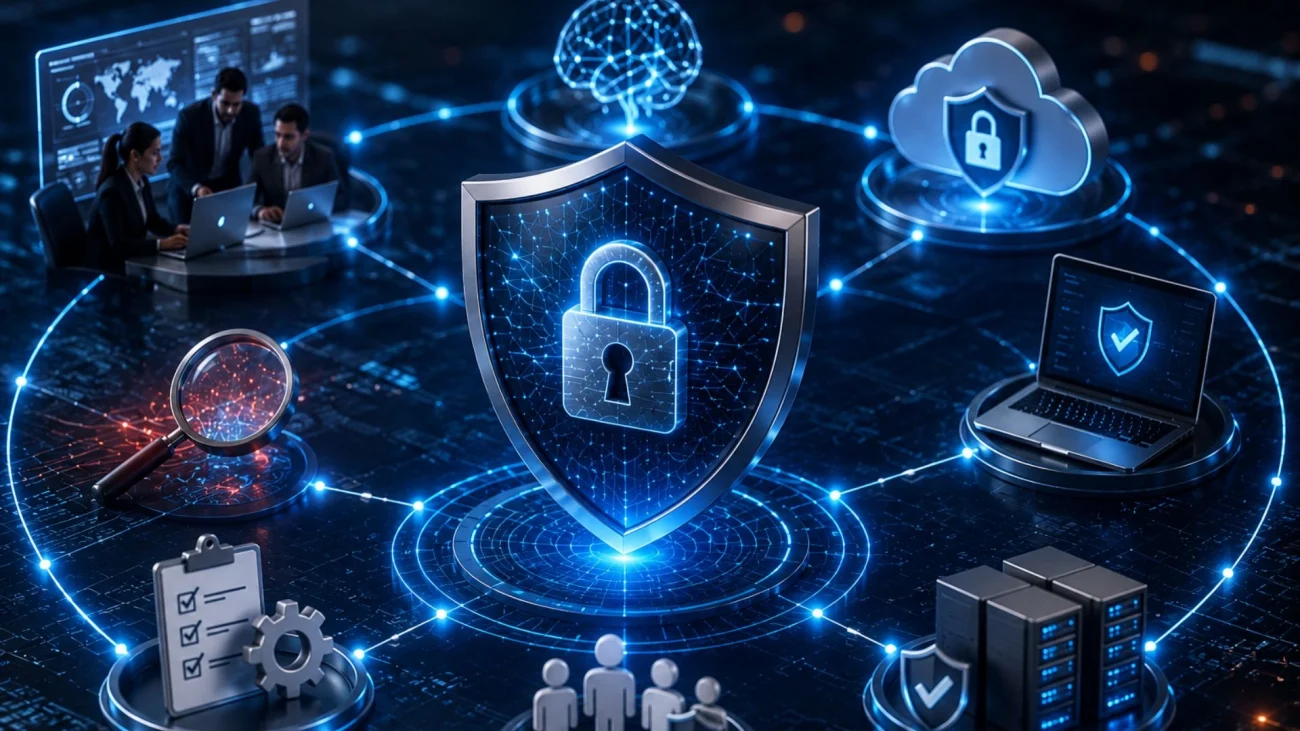
Successfully implementing AI cybersecurity requires more than installing new software. Organizations should combine intelligent technology with strong security policies and employee awareness.

Assess Your Current Security Posture

Begin by identifying existing security gaps.

Review:

  • Network infrastructure
  • Endpoint devices
  • Cloud environments
  • Password policies
  • Backup strategies
  • User access controls

A security assessment helps organizations understand where AI can provide the greatest value.

Choose the Right AI Security Platform

Look for solutions that include:

  • AI-powered threat detection
  • Endpoint protection
  • Cloud security monitoring
  • Email security
  • Automated incident response
  • Threat intelligence
  • Ransomware protection
  • Compliance reporting

Selecting a scalable platform ensures your cybersecurity strategy can grow alongside your business.

Train Employees Regularly

Even the best AI-powered security tools cannot prevent every attack if employees are unaware of cyber risks.

Regular training should cover:

  • Phishing awareness
  • Password best practices
  • Multi-factor authentication
  • Safe browsing habits
  • Data protection
  • Remote work security

Educated employees become an important part of your organization’s defense strategy.

Keep Systems Updated

Outdated software remains one of the most common causes of successful cyberattacks.

Businesses should regularly:

  • Install security patches
  • Update operating systems
  • Upgrade applications
  • Remove unsupported software
  • Review security configurations

AI performs best when combined with a well-maintained IT environment.

Continuously Monitor and Improve

Cybersecurity is not a one-time project.

Businesses should continuously:

  • Review security alerts
  • Monitor network activity
  • Test backups
  • Perform vulnerability assessments
  • Conduct regular security audits

Continuous improvement helps organizations stay prepared for emerging threats.

AI Cybersecurity Checklist

Before finalizing your AI-powered security strategy, make sure the following are in place:

  • Multi-Factor Authentication enabled across all critical systems
  • AI-based threat detection actively monitoring network activity
  • Endpoint protection deployed on all devices
  • Cloud environments properly configured and secured
  • Email security systems in place to catch phishing attempts
  • Backup strategy tested and verified for quick recovery
  • Employee training conducted on current cyber threats
  • Regular security audits scheduled to catch new vulnerabilities

Conclusion

As security technology progresses, protecting businesses becomes more difficult. AI-based cybersecurity offers more solutions to the problem. Because it is able to detect abnormal behaviors, automate risky threat responses, secure cloud systems, and enable organizations to have more advanced knowledge of future threats and keep them less vulnerable, AI-based cybersecurity will help progress organizations a step further in securing their systems.

It is important to note that although AI-based security technology has become more vital to the protection and resilience of a system and its organization from possible threats and attacks, it cannot replace highly skilled cybersecurity personnel. However, it will become more essential in strengthening the protection of a system. Of the organizations that have AI-based security technology, those that have employees who are well informed, regularly update their systems, and possess a high level of security-related policies, will have more protection of their system, their clients, and in turn, the organization's growth in business.

The more digital systems are used in organizations, the more advanced AI-based security technology will be in order to secure and protect IT systems and sustain resilience. 

Frequently Asked Questions

AI-powered cybersecurity uses artificial intelligence and machine learning to detect, analyze, and respond to cyber threats more quickly and accurately than traditional security methods.

AI can identify suspicious encryption behavior, isolate infected devices, and stop ransomware before it spreads across the network.

No. AI supports security teams by automating repetitive tasks and improving threat detection, but human expertise remains essential for investigation and strategic decision-making.

AI continuously monitors cloud environments, detects suspicious user behavior, identifies unauthorized access attempts, and helps secure cloud applications.

Yes. Many modern AI-powered cybersecurity solutions are designed for businesses of all sizes, offering scalable protection without requiring large security teams.

Healthcare, banking, retail, manufacturing, education, government, logistics, and professional services all benefit from AI-powered security because they rely on sensitive digital data.

Yes. AI analyzes sender reputation, email content, links, attachments, and user behavior to identify phishing attempts before they reach employees.

Because it enables businesses to detect unknown threats, automate responses, reduce human error, and strengthen security against increasingly advanced cyberattacks.