Blogs by Chipin

Cloud Backup vs Traditional Backup: Which is Better for Businesses in the UAE?

Cloud Backup vs Traditional Backup Which is Better for Businesses in the UAE

In every industry, data has established itself as a business-critical asset. Digital information comes in many forms, including customer data, financial records, emails, project files, and operational records. The everyday functioning of an organization relies on digital data. Data, however, is always at risk from many threats including hardware malfunctions, accidental deletions, cyber attacks, ransomware, natural calamities, and system failures.

Businesses that suffer data loss from any of the threats and do not have a proper data protection and backup strategy suffer from significant financial losses, operational downtime, and a loss of business. This makes a data backup strategy a mandatory need and not a good to have.

Organizations have always depended on external hard drives, tape storage, and on-premises servers for their data backup. Today’s digital age demands faster, more secure, and more scalable systems for data backup. The traditional systems of data backup are unable to fulfill these requirements.

This is where Cloud Backup in the UAE becomes the first and best choice. Being a system of backup that uses the internet, It provides remote accessibility, automation for data backup, advanced cyber protections, and disaster recovery systems.

But does that mean old systems of backup are now good for nothing?
Not at all.

Actual systems of Cloud Backup and Traditional Backup will be compared in this guide to understand their uses in conjunction with each other for the maximum benefit for businesses in the UAE.

What is Cloud Backup

Cloud Backup

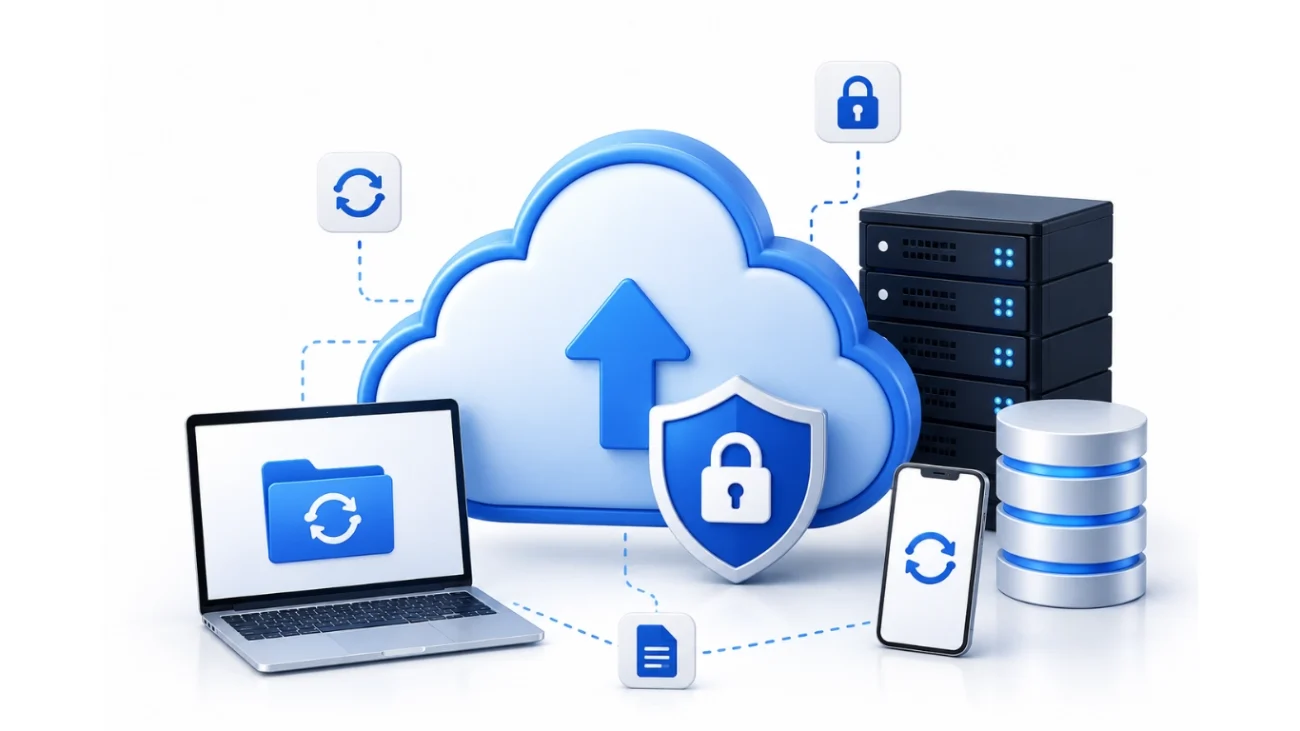
Cloud backup allows business data to be securely copied to remote cloud servers using the internet. Data backups are encrypted and sent to data centers for cloud service providers rather than sent to onsite storage devices.

That service providers save business data even when local systems fail through automated file copies done at scheduled intervals. Reliability, flexibility, scalability, and solid disaster recovery services explain the increasing use of Cloud Backup Services in the UAE. 

Procedure for this is simple:

The risks of missed backups caused by human error are reduced greatly with this automated process.

What is Traditional Backup?

Traditional Backup

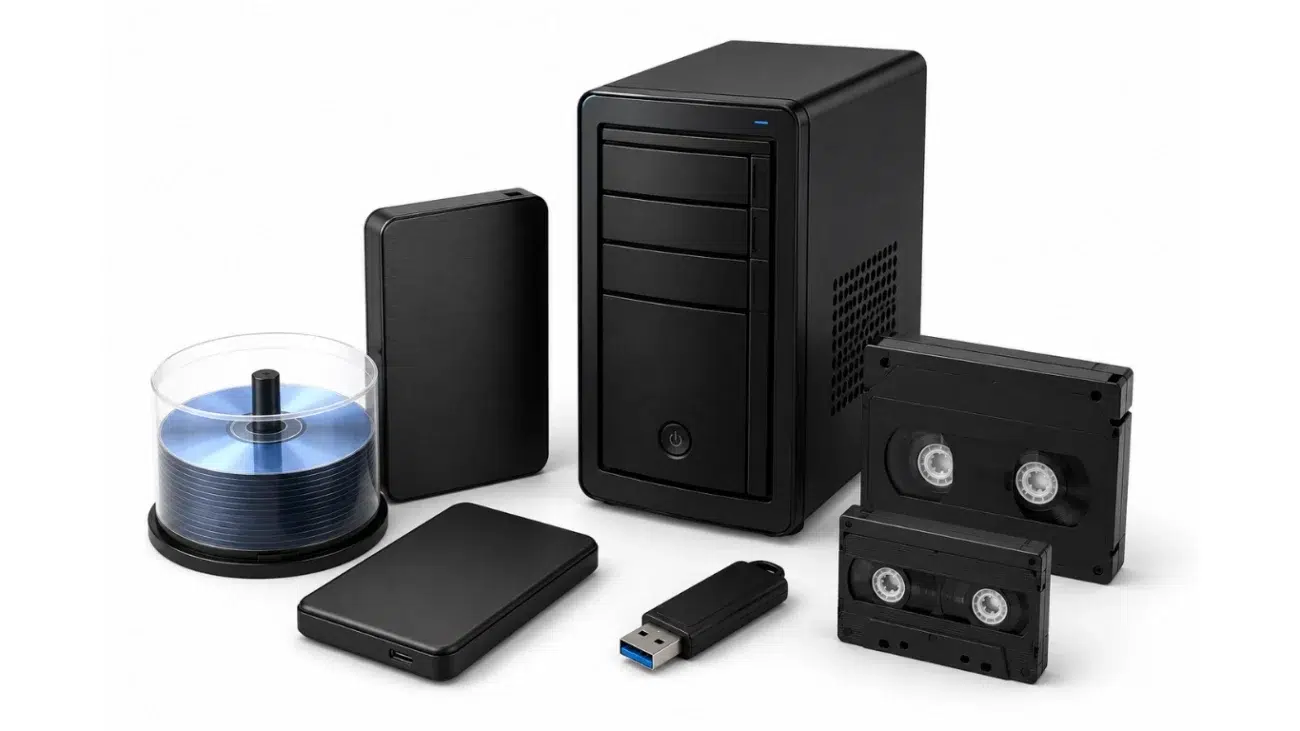
Backups made by copying business data to onsite physical storage remain employed by some organizations. These are made available by the following:

These make onsite storage easier to manage by eliminating the need to go offsite to retrieve backup data. Backup servers also speed local data restores. Onsite data storage can fail and makes data vulnerable to theft, fire, and flooding. Protecting data onsite also makes data vulnerable to hardware failures and ransomware attacks.

Why Backup is Critical for UAE Businesses

Companies in the UAE are facing an ongoing battle with more sophisticated cyber threats and heightened compliance standards. Not having access to vital business information can stop operations, erode trust with clients, and lead to expensive recovery tasks.

Good backup solutions can help businesses:

Every size and type of business needs a solid backup plan as part of their core IT systems.

Cloud Backup vs Traditional Backup: Quick Comparison

Feature

Cloud Backup

Traditional Backup

Storage Location

Remote cloud servers

Local devices

Accessibility

Anywhere with internet

On-site only

Scalability

Highly scalable

Limited by hardware

Initial Investment

Low

High

Maintenance

Provider managed

Business managed

Backup Automation

Yes

Often manual

Disaster Recovery

Excellent

Limited

Cybersecurity

Advanced encryption

Depends on local security

Hardware Required

No

Yes

Remote Work Support

Excellent

Limited

While both solutions protect business data, they differ significantly in terms of flexibility, cost, management, and recovery capabilities.

Advantages of Cloud Backup

  • Access Your Data Anytime, Anywhere.
    The most significant advantage of having cloud backup is that you can back it up from pretty much anywhere. Employees in Dubai, Abu Dhabi, and even people who travel internationally can have their business files restored. This is especially great for companies looking to implement remote business practices.
  • Automatic Backups
    This system backs up all business files routinely. This backup is completely automated. Because the routine system backup does not require any users, it saves time, improves consistency, and reduces human error.
  • Modern Backup Protection
    Most attacks by modern hackers target business backup files. Having up-to-date cloud file protection provides backup files that cannot be changed, a history of different versions, and a security system that requires multiple steps to access. Many modern backup systems allow businesses to restore computer systems without paying hackers.
  • Backup Cloud Cost
    Having a backup system can be really costly. Having servers, backup systems, external drives, and backup tape systems can cost a lot of money, this systems can greatly reduce these costs by charging the cost of the storage the business uses.
  • Easy to Adapt to Changing Needs
    As your business grows, so does the amount of data you have to back up. Cloud storage can grow quickly without requiring the purchase of additional storage.
  • Faster Recovery
    That Systems can help recover business files that are deleted or lost even in a disaster. Cloud providers make copies of the data you back up and store them in multiple secure locations. This limit of downtime is greatly reduced and is beneficial for business operations.
  • Enterprise-Level Security
    Top  companies know how important security is to protect company data and invest highly in elite security options. Their systems often use AES-256 encryption, transmission SSL/TLS, multi-factor authentication, access security policies, constant observations, routine security examinations, and data redundancy to guarantee data is secured and consistently accessible. 

Having this level of protection is desirable because it shields sensitive business information.

Advantages of Traditional Backup

There are distinct advantages to traditional backup systems despite the growing prominence for cloud systems.

  1. Faster Local Recovery
    There are traditional backup tools that restore large files to a local system faster than the time it would take to retrieve the data from cloud storage, particularly when the upload/download speeds of the internet are slow.

  2. No Internet Dependence
    Data that is backed up onsite means that files can be restored with no internet access. This can be beneficial in locations where there are issues with internet access.

  3. Complete Control
    Some companies decide to backup data on site because total control of devices, security, backup protocols, and permissions is ideal for some companies. Although, companies will be responsible for maintenance of hardware, security, and management of systems. 

  4. One-time Hardware Cost
    Compared to cloud subscriptions that are paid regularly, traditional backup systems are purchased once. Even though there will still be costs for upkeep, some businesses may prefer this over the subscriptions.

  5. Legacy System Backup
    Some traditional backup tools easily integrate with older systems and tools than cloud systems.Local backup systems may be vital for businesses with older systems.

Disadvantages of Cloud Backup

Cloud Backup in the UAE has its advantages and disadvantages. It’s important to consider these disadvantages before opting for a service.

  1. Dependent on Internet Speeds
    For backup and recovery using the cloud, a stable internet connection is a must. If the organization has a slow or unreliable internet connection, the backup and recovery processes can take even longer for large datasets.
  2. Monthly Subscription
    The backup servers and devices for backup are owned by the service provider. Thus, there are no large capital expenditures, but a cloud backup service is a subscription service. Thus, costs for backup must be planned every month.
  3. Backup Duration
    The first backup can take days to weeks for large datasets. However, it is only the first backup that is a full backup. All subsequent backups will be differential backups and will take significantly less time.
  4. Backup Duration
    The first backup can take days to weeks for large datasets. However, it is only the first backup that is a full backup. All subsequent backups will be differential backups and will take significantly less time.
  5. Accountability
    Cloud service providers backup and manage the infrastructure. It is up to the organization to manage and backup the users, passwords, rights, and permissions. Data security will be ensured by the backup service and by the organization.

Disadvantages of Traditional Backup

Traditional backups have some downsides that companies need to think about:

  1. Hardware Failure
    Backups that rely on hardware fail when that hardware fails. There’s typically only one copy of the data, so it might be lost forever.
  2. High Maintenance Requirements
    A big part of the IT team’s job is making sure that backups happen (backups are actually checked to happen), the storage is replaced when full, the hardware is kept up, and the software is kept updated. Manual backups are a drain on time and resources and add a lot to the IT team’s workload.
  3. Limited Disaster Protection
    If backups exist in the same place as the primary system, the backups and primary data can be wiped out if a fire occurs, if there’s flooding, if there’s a theft or a power failure.
  4. Scalability Challenges
    To keep data backed up, companies need to keep buying more and more storage, which increases the cost and the time spent managing the storage.
  5. Higher Risk of Human Error
    All backups done manually run the risk of mistakes. Backups might be skipped and scheduled backups might be done but incomplete or the wrong data might be backed up, overwriting the actual backed up data.

Cloud Backup vs Traditional Backup: Detailed Comparison

Feature

Cloud Backup

Traditional Backup

Accessibility

Access from anywhere

Limited to local network

Initial Cost

Low

High

Ongoing Maintenance

Minimal

High

Hardware Requirement

No

Yes

Backup Automation

Automatic

Manual or scheduled

Disaster Recovery

Excellent

Limited

Scalability

Unlimited

Hardware dependent

Security

Encryption and multiple protections

Depends on internal setup

Recovery Speed

Fast (internet dependent)

Fast for local restores

Remote Work Support

Excellent

Limited

Business Continuity

Strong

Moderate

Which Backup Solution is Better for UAE Businesses?

The appropriate backup solution relies on the scale of your business, how you conduct your operations, compliance needs, the planned expansion of your business, and other factors.

Cloud Backup is the right choice for:

Traditional Backup is Suitable For:

The modern world creates several challenges for an organization. For most, the modern digital environment requires cloud backup for flexibility and resilience.

Why Choose Chipin Corp for Cloud Backup in UAE?

At Chipin Corp, we proudly partner with businesses in Dubai, Sharjah, Abu Dhabi, and all of UAE to safeguard vital business data through our cloud backup solutions which are secure, scalable, and flexible.

Our Services include:

We effectively create customized backup plans during the backup service process for business data of start-ups, SMEs and corporates so that business data is safeguarded and can be accessed anytime.

Conclusion

No business is immune to data loss. Being the victim of a cyberattack, having a hardware device fail, losing data via accidental deletion, or having a natural disaster strike your location can all cause data loss. Picking the right backup strategy can help protect your business and ensure resilience and productivity throughout your business.

Cloud backup provides businesses the necessary modern solutions for backup including automation and security. While traditional backups can still be viable, modern backups have made them almost obsolete. However, some businesses seek a backup solution that provides the benefits of both modern and traditional backups. For these companies, hybrid backups provide the best solution.

If you are in the market for a back up solution, you can avoid the hassle and the dangers of leaving data vulnerable by choosing Chipin Corp. They specialize in providing comprehensive modular cloud backup and disaster recovery solutions.

Don’t delay protecting your business. Because it’s data that is the most valuable business asset, you should be inquiring about Chipin Corp Cloud Backup Services in the UAE.

Frequently Asked Questions

What is Cloud Backup?

Copying business data and saving it on safe remote servers is called Cloud Backup. This makes retrieval possible in case data is lost or harmed.

Yes. Backup clouds will apply, at minimum, encryption methods, access control, and constant observations of business data.

For most businesses in this day and age, Traditional Backup methods are more flexible and scalable. Some businesses, however, use Traditional methods of Backup with Cloud Backups.

This is highly dependent on the objectives for data recovery and on the operations of the business. Usually, it is recommended that important data is backed up at least once a day.

Yes. Ransomware recovery is possible due to the methods of secure recovery, versions history, and immutable backups.

Cloud Backups would be beneficial to the healthcare, finance, education, legal services, retail, manufacturing, logistics, and professional services industries.