What Are the Main Components of IT Infrastructure?
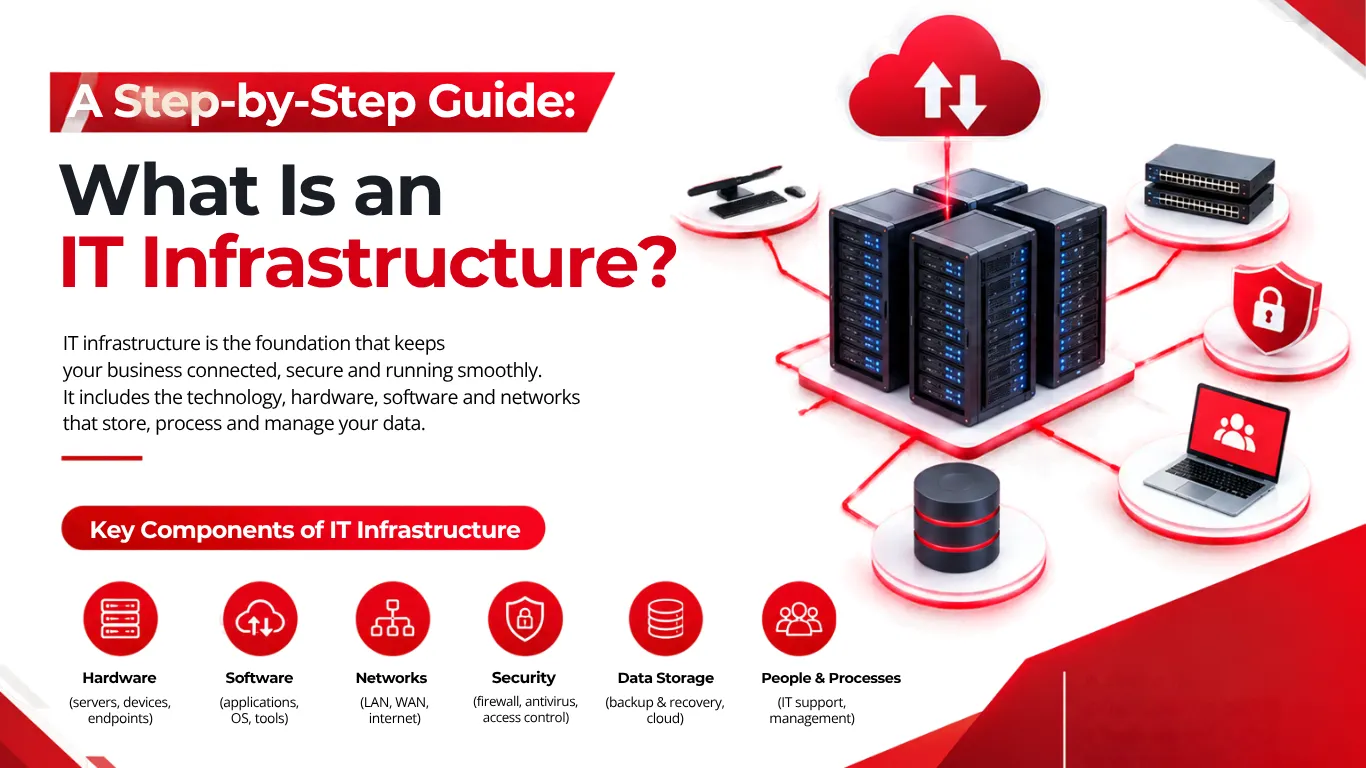
The main components of IT infrastructure include hardware, software, networking, data storage, cloud services, cybersecurity, and IT management tools. Together, these elements provide the systems and connections required for employees and business applications to work efficiently.
Each component has a different role, but they are closely connected. For example, employees may use a laptop to access a cloud application through the company’s network while security tools protect the connection and backup systems protect important data.
Let’s look at the major components in more detail.
Hardware
Hardware includes the physical technology used by a business. This can include:
Hardware requirements depend on the organisation’s operations. A small office may rely heavily on cloud services and employee laptops, while a larger company may require dedicated servers and networking equipment.
Software
Software provides the applications and operating systems employees use to perform their work.
Examples include operating systems, accounting software, customer relationship management platforms, productivity applications, databases, security software, and business-specific applications.
Software also needs to be maintained regularly. Updates can introduce new features, improve performance, and address security vulnerabilities.
Networking
Networking connects devices, systems, employees, and applications. It can include wired Ethernet connections, Wi-Fi networks, routers, switches, firewalls, VPNs, and internet connectivity.
A properly designed business network allows users and devices to communicate while controlling who can access specific resources.
Data Storage
Businesses generate and store large amounts of data, including documents, customer information, financial records, emails, databases, and application data.
Storage infrastructure can include physical servers, network-attached storage, cloud storage, and other data storage platforms.
Businesses also need appropriate backup systems so that important information can be recovered if it is accidentally deleted, corrupted, or affected by a security incident.