Blogs by Chipin

Cyber Security Checklist for Businesses: 12 Essential Steps to Protect Your Organization

Cyber Security Checklist

Increasingly, technology permeates all areas of business. Digitized systems to store customer data, manage finances, and administer collaborative work and company resources have become the most important systems in the daily operations of modern businesses. Although advanced technology optimizes business operations, it also increases the potential risks of cybersecurity threats, which all businesses have a responsibility to mitigate.

Cybercriminals are no longer only targeting large corporations. They have turned their attention to businesses that are small and medium-sized. Such businesses are more likely to have smaller security and defense resources. It is not an exaggeration to say that the financial, legal, and reputational costs of a successful data breach, ransomware, or phishing attack are devastating to the normal operations of a small or medium-sized business.

The positive spin is that the proliferation of most cyber threats can be avoided if the appropriate cyber defense systems and resources are implemented. The Cyber Security Checklist for Businesses is an effective step-by-step strategy for identifying the weak areas in a business’ cyber defense systems and how to fortify those gaps.

Every business and institution, from a corporate office to a retail shop to a healthcare practice to an educational institution, in Dubai and the UAE, must have an appropriate level of cyber defense resources in place.

Why Every Business Needs a Cyber Security Checklist

Cybersecurity is vital for every business. With the rise in the use of the cloud, remote work, and smart devices, the potential portals for attackers have increased.

With a robust Cybersecurity Checklist for Businesses a company can:

Using a Cybersecurity Checklist is a far better approach when compared to the use of IT security measures post a cyberattack.

1. Conduct a Cyber Security Risk Assessment

Conduct a Cyber Security Risk Assessment

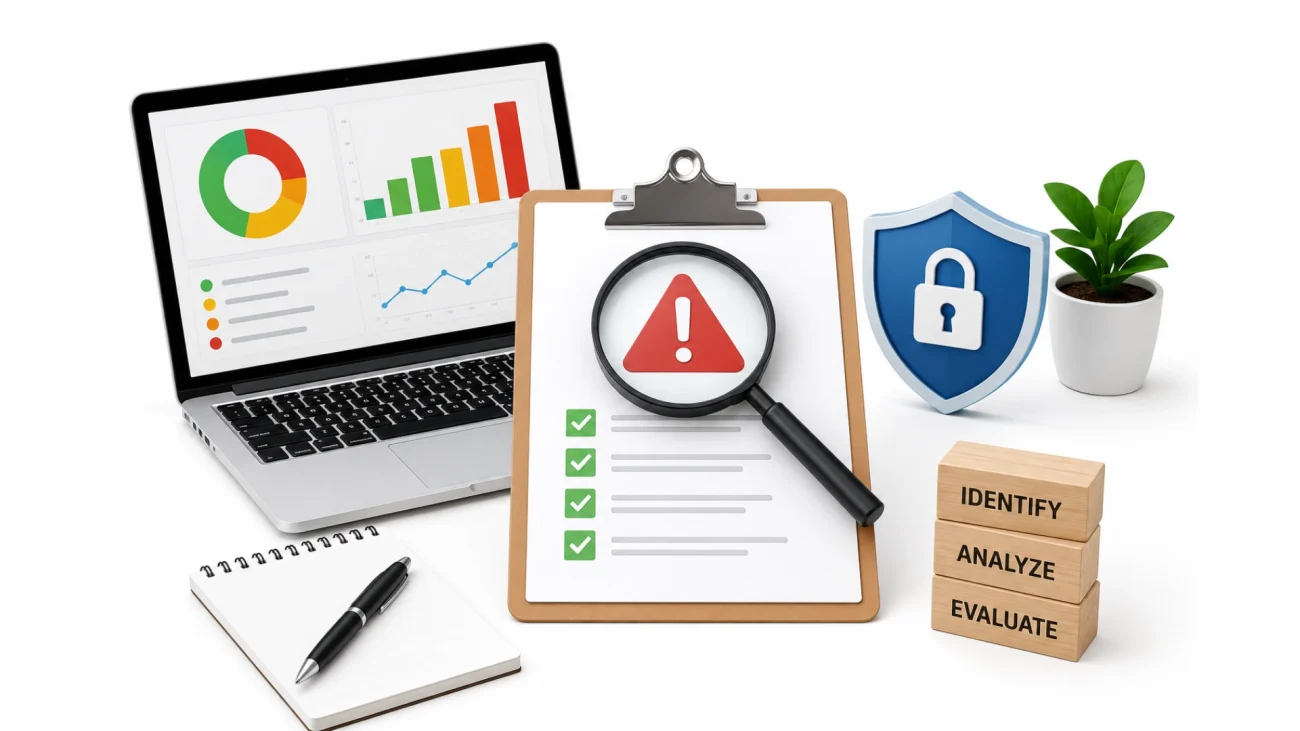
The Cyber Security Risk Assessment serves to help businesses analyze their IT systems. This assessment identifies their most critical and valuable IT resources, the existing security vulnerabilities and the potential threats. The results from this assessment help to justify and rank the security initiatives to the greatest business impact.

The following areas should be included in the assessment:

Continuously and consistently performing risk assessments will provide the adaptability and assurance needed to address and guard against any evolving threats during the course of the assessments and the changing business.

2. Keep Software, Operating Systems, and Devices Updated

For better cybersecurity, the best best practice is to maintain up-to-date software and device updates.

Software providers are aware of threats and vulnerabilities that exist and provide updates for their software. Updating software delays exposes systems to even more threats.

Here is a list of software and devices that a business should continuously update:

The best you can do to keep up with the updates is turn on automatic updates.

3. Use Strong Passwords and Enable Multi-Factor Authentication (MFA)

Password breaches are still one of the major threats and concerns to cyber security.
Weak and easily guessable passwords give attackers quick access to sensitive systems. Passwords that are reused give them access to even more systems.

A password policy should require all employees to:

Multi-factor Authentication (MFA) should be required and enforced for all critical accounts to increase security.Authentication with a mobile app, a fingerprint scan, or a security key are examples of methods that validate a user’s identity beyond their password.

MFA should be enforced for access to:

MFA provides an additional layer of security from unauthorized access even when passwords are compromised.

4. Secure Your Business Network and Endpoints

Cybercriminals understand how much your network means to your business. That is why they will try to penetrate it.

A secure network should include:

Additionally, network security covers the security of all connected devices to the network. That means all your employees’ laptops, desktops, smartphones, and tablets.

Endpoint protection includes:

If your business has a hybrid or fully remote workforce, ensure that all Remote devices meet the same security requirements as devices used in the company office.

5. Backup and Encrypt Your Business Data

Data is among some of the best assets that a company has. The loss of access to customer data as well as financial records or operational information can seriously disrupt business continuity.

A robust backup strategy will help businesses recover quickly following attacks by ransomware and accidental deletions or hardware malfunctions.

Make sure you follow the 3-2-1 backup rule:

Backups should consist of:

The encryption layer adds another layer of protection by making sensitive information unreadable by unauthorized users, which reduces the risk of data theft or loss of devices.

6. Train Employees on Cyber Security Best Practices

Zeroing in on employees as the main source of human error, even the most advanced cybersecurity technologies are helpless against this scourge of the Internet. Phishing emails, social engineering attacks, and fraudulent sites deliberately target employees.

Training employees at regular intervals about security helps them understand and counter cyber threats before they become more serious.

Security training programs help employees learn about the threats posed by:

Simulated phishing and other security attacks are recommended to test awareness of employees and to teach them about security in cyber threats.

When every employee is made accountable and active in the defense of the business, a culture of cybersecurity will have been established.

7. Secure Email and Cloud Applications

Cybercrime affects companies through email in many ways. Phishing and fraud emails target companies of every size. Email and collaboration software, especially Microsoft 365 and Google Workspace, are a big part of business operations. This makes cloud security important.

To safeguard your business, you should think about these things:

Cloud technology makes protecting your business more difficult. Cybercriminals can still target your business with ransomware, and still affect cloud services through data deletion. You should regularly and manually back up your data to protect your business from data loss.

8. Implement Access Control Policies

Your company can’t give every employee access to every system or level of data. The more access you give, the more you increase your risk of exposing sensitive data and the risk of intentional employee misconduct.

Implement Role-Based Access Control (RBAC) and the Principle of Least Privilege (PoLP) and only give your employees access to data relevant to the resources they need to perform their job.

Some good access control practices to utilize include the following:

The more effective your access control is, the less potential negative impacts you can have if accounts are breached.

9. Develop an Incident Response and Disaster Recovery Plan

Even with the most robust security measures however, no business is completely secure from cyber-attacks. Making sure you are prepared to deal with threats that could be able to happen is the best method of reducing the time that your business can be disrupted.

A disaster response plan must be able to define:

Additionally, a business should have a disaster recovery plan that explains how your business will recover critical systems and critical data after a cyber incident.

Having a business recovery and disaster mitigation plan is one thing; however having a plan that has been tested and rehearsed is your best protection when you need to recover quickly the most.

10. Monitor and Audit Your IT Environment

Cybersecurity is a constant battle. Having safety measures in place to monitor activity helps catch potentially harmful incidents before they happen.

Elements that a company should monitor include:

Security audits and vulnerability assessments done on a periodic basis help identify software that needs to be updated, poor configurations and other security concerns.

A proactive defense against threats becomes increasingly effective the more monitoring is used in conjunction with Cyber Security Risk Assessments done on a periodic basis.

11. Evaluate Third-Party Vendor Security

Cloud-hosting partners, processors of payments along with IT service companies help many businesses and can make them more efficient. These partnerships could make businesses more efficient, but also increase the possibility of vulnerabilities emerging in the cybersecurity environment. 

Before allowing a vendor access to your systems and your data, assess their security practices.

What you need to consider is:

Continuously assess vendor security especially if they process sensitive business and customer data.

12. Partner with Managed Cyber Security Services

The management of cybersecurity within an organization can be a challenge, particularly for smaller or medium-sized enterprises with inadequate IT resources.

A trusted partner for Managed Cyber Security Services gives companies access to highly skilled professionals with the most advanced security tools and continuous monitoring without the expense of building an entire security team in-house.

Managed services usually consist of:

If you are a business looking for dependable Cyber Security Services in Dubai Partnering with an experienced IT provider will provide proactive protection against cyber-attacks of the present, your team can concentrate on advancing your business.

Cyber Security Best Practices Every Business Should Follow

Cyber Security Best Practices Every Business Should Follow

A cyber Security Checklist for Business is a good start, but the best long-term security comes from implementing solid security practices each day. Businesses must regularly update their operating systems as well as their software and network devices to address security holes and lower the chance of cyber-attacks. Setting up Multi-Factor authentication (MFA) for critical accounts adds a further security layer to protect against access by unauthorized persons.

Awareness of employees plays an essential part in the security. Regular training can help employees recognize the phishing emails and social engineering threats or other cyber-attacks, before they can cause harm. Companies should also secure sensitive data of their business using encryption, conducting regular backups and testing recovery plans for data to ensure continuity of business operations in the event of an unexpected incident.

Conducting regular routine Security Risk assessments and monitoring continuously networks and devices, and implementing roles-based access control helps companies discover vulnerabilities and enhance their overall security strategy. Additionally, cloud-based applications must be secured and regularly reviewed to avoid unauthorized access.

If you are a business that requires assistance from experts, partnering with a reputable provider for managed cyber security services provides ongoing monitoring, detection of threats, as well as proactive management of security. By adhering to these best practices for cybersecurity companies can put in place stronger defenses against ever-changing cyber-attacks and safeguard their businesses in the long run.

Common Cybersecurity Mistakes Businesses Should Avoid

A lot of cyber attacks do not happen due to sophisticated techniques for hacking, but due to mistakes that are easy and avoidable. Common mistakes include the use of passwords that are weak or repetitive delay in software updates and failing to activate multi-factor authentication (MFA) for crucial accounts. Companies also run the risk of being hacked in the absence of regular backups of their data and granting employees unneeded access rights, or not providing security awareness training.

Other frequent mistakes are misconfiguring cloud services, not focusing on the monitoring of networks and trusting third-party vendors but not checking their security policies. Many organizations think that antivirus software can ensure their systems are secure.

Effective cybersecurity requires a multi-layered strategy that incorporates technology, awareness for employees and constant monitoring. By identifying and correcting these common errors, businesses can drastically reduce their vulnerability to cyber security threats and enhance their overall security position.

Why Choose Chipin Corp for Business Cybersecurity?

What are the most important features of a good cybersecurity solution? If you take a look, you will see that the best cybersecurity solutions are multilayered, flexible, and scalable, built around the most modern technology and excellent professional support and services.

Here at Chipin Corp, we are proud to have built strong partnerships with many companies across Dubai and the UAE through our customized cybersecurity solutions with strong professional support and services.

Our managed cybersecurity services are aimed at people of all demographics.

Some of our offerings are:

At Chipin Corp, we have a big team of excellent, dedicated, and highly trained professionals. Our cyber solutions are among the best, and we can customize solutions to meet requirements and budgets at all levels.

Conclusion

Due to a rise in cybercrime, safeguarding your business from cyber threats is now more important than ever. An effective business Cyber Security Checklist helps safeguard business resources from cybercrime, enhances business resilience, and reduces security vulnerabilities.

Business cyber security is a multi-layered approach. Each element, from performing a Cyber Security Risk Assessment to securing business cyber networks, training business staff, and using Managed Cyber Security Services, combines to enhance business cyber security.

Cybersecurity is a perpetual process, not a fixed state. Use this checklist together with established Cyber Security Best Practices and your business will be secure and mitigate threats while retaining customer confidence during periods of digital evolution.

Look  further for Chipin Corp to find superior Cyber Security Services in Dubai to lead the creation of your safe and resilient IT structure.

Frequently Asked Questions

What is a Cyber Security Checklist for Businesses?

A Cyber Security List for Business is a logical guide which outlines the essential security measures to safeguard business systems as well as employees, networks, and personal information from cyber attacks.

Smaller businesses typically have less security capabilities, making them easy potential targets of cybercriminals. Implementing security measures that are effective can decrease the risk of data breaches as well as financial loss.

A Cyber Security Risk Assessment identifies security weaknesses, analyzes the threat and aids businesses in determining the best security upgrades in accordance with the level of risk.

Businesses must review their security policies at least every year or whenever significant changes occur like the adoption of new technology or expanding operations.

Managed Cyber Security Services provide continuous monitoring and detection of threats security, firewall management endpoint protection, as well as incident response via a specialist IT service.