What Is (ICT)?
Information and Communication Technology (ICT) refers to the technologies, systems, and digital tools used to create, process, store, access, and exchange information. It includes computers, software, networks, internet connectivity, cloud platforms, telecommunications, mobile devices, and digital communication tools.
In simple terms, ICT combines information technology with communication technologies to help people and organizations manage information, communicate efficiently, and operate in an increasingly connected digital environment.
Today, ICT supports almost every industry and plays a key role in business communication, data management, cybersecurity, remote work, and digital transformation.
Key Takeaways
What Is Information and Communication Technology (ICT)?
Information and Communication Technology is a broad term used to describe the technologies that allow people and organisations to create, collect, process, store and share information.
ICT is not limited to computers. It includes the wider digital environment that connects people, devices, applications and information.
A modern ICT environment may include:
For example, when an employee uses a laptop to access a cloud application, communicate through email, join a video meeting and securely share files, multiple ICT technologies are working together.
What Does ICT Stand For?
Information: Information refers to the data created, collected and used by individuals and organisations. This can include documents, customer records, emails, reports and other business information.
Communication: Communication refers to the exchange of information between people and systems. Examples include email, messaging, video conferencing and business phone systems.
Technology: Technology includes the devices, software, networks and systems that make information processing and communication possible.
Together, these elements create an environment where information can be managed and shared effectively.
What Are Examples of Information and Communication Technology?
ICT includes a wide range of technologies that are used in everyday life and business operations.
Computers and Mobile Devices
Desktop computers, laptops, tablets, and smartphones allow users to access information, applications and communication tools.
Internet and Networks
The internet, Wi-Fi, local area networks and other networking technologies allow devices and systems to connect and exchange information.
Cloud Computing
Cloud computing allows organisations to access applications, storage and computing resources over the internet.
Digital Communication Tools
Email, instant messaging, video conferencing and collaboration platforms allow people and teams to communicate from different locations.
Business Phone Systems
VoIP and unified communication systems help organisations manage voice and business communications through digital networks.
Cybersecurity Technologies
Firewalls, endpoint protection, identity management and monitoring tools help protect ICT systems and business data.
Data Backup and Recovery
Backup and disaster recovery technologies help organisations protect important information and recover from disruptions.
Artificial Intelligence and Automation
AI-powered tools and automation technologies can analyse information, support decision-making and automate repetitive processes.
What Are the Main Components of ICT?
A modern ICT environment usually consists of several connected components.
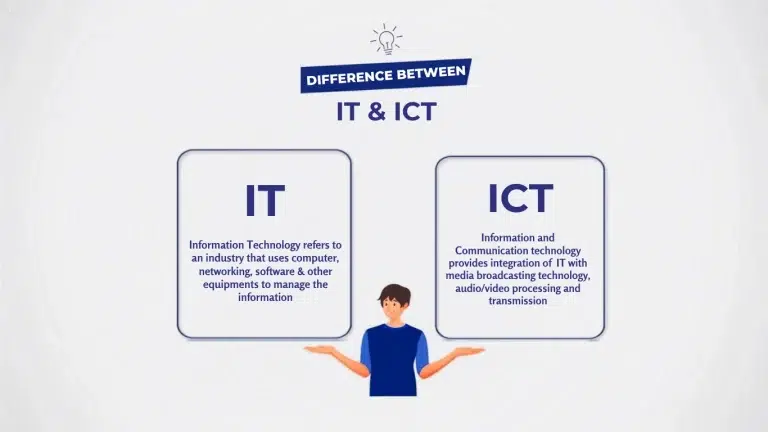
ICT vs IT: What Is the Difference?
ICT and IT are closely related, but ICT generally has a broader scope.
What Technologies Are Included in ICT in 2026?
ICT continues to evolve as organisations adopt new technologies and digital ways of working.
Cloud Computing
Cloud platforms allow businesses to access applications, storage and technology resources more flexibly.
Artificial Intelligence (AI)
AI can support data analysis, automation, cybersecurity and technology operations.
Cybersecurity
As organisations rely more heavily on connected systems, cybersecurity remains an essential part of ICT.
Internet of Things (IoT)
IoT connects devices and sensors that collect, share and process information.
Unified Communications
Businesses increasingly use integrated platforms that combine voice, video, messaging and collaboration.
Automation
Automation technologies can reduce repetitive tasks and help streamline business processes.
Advanced Networks
Reliable and secure networks remain the foundation for cloud applications, digital communication and connected business operations.
Why Is ICT Important for Businesses?
ICT plays an important role in how modern organisations communicate, manage information and operate.
A well-planned ICT environment can help businesses:
Technology is no longer separate from many business operations. Communication, customer service, data management, and collaboration often depend on reliable ICT infrastructure.
How Do Businesses Use ICT?
Businesses use ICT in many areas of their daily operations.
Communication and Collaboration: Email, video meetings, messaging platforms, and business phone systems allow employees and teams to communicate efficiently.
Data Management: Businesses use ICT systems to store, organize, and access important information.
Remote and Hybrid Work: Cloud applications and secure remote access technologies allow employees to work from different locations.
Cybersecurity: ICT security technologies help organizations protect networks, devices, applications, and sensitive information.
Customer Service: Businesses can use communication platforms, CRM systems, and digital tools to improve customer interactions.
Business Operations: ICT supports areas such as finance, HR, sales, operations and administration.
A Real-World Example of ICT in a Modern Office
Imagine a business opening a new office with 50 employees.
The organisation may require:
Each system has a different purpose, but they all need to work together.
Employees need reliable connectivity to access applications and communicate with colleagues. Business data needs to be protected and backed up. Communication systems need secure and stable networks.
This connected environment is a practical example of ICT in a modern workplace.
What Are the Benefits of ICT?
Improved Productivity
Digital tools can help employees complete tasks more efficiently and access the information they need.
Better Communication
ICT makes communication easier between employees, customers and business partners.
Greater Flexibility
Cloud platforms and remote-access technologies can support flexible working environments.
Improved Collaboration
Teams can share information and work together even when they are in different locations.
Better Access to Information
Authorised users can access important information more efficiently through properly managed systems.
Scalability
Technology infrastructure can be adapted as a business grows and its requirements change.
Business Continuity
Backup, recovery and reliable infrastructure can help businesses reduce the impact of technology disruptions.
What Are the Challenges of ICT?
While ICT provides significant benefits, organisations also need to manage several challenges.
Cybersecurity Risks: Connected systems can face threats such as phishing, malware, ransomware and unauthorised access.
Data Privacy: Businesses need appropriate processes and security controls to protect sensitive information.
Technology Integration: Different technologies may not always work together seamlessly. Proper planning is important when integrating systems.
Rapid Technological Change: Technology changes quickly, making it necessary for businesses to review and update their ICT environments.
Skills and Training: Employees need appropriate training to use technology effectively and securely.
Cost Management: Businesses need to balance technology investments with their operational needs and long-term goals.
What Is the Role of AI in ICT in 2026?
Artificial intelligence is becoming an increasingly important part of modern ICT environments.
AI can support organisations in areas such as:
However, AI does not replace the need for reliable ICT infrastructure.
AI-powered technologies still depend on secure networks, quality data, appropriate computing resources and effective technology management.
For businesses, AI is increasingly becoming one component of a broader ICT strategy.
How Does ICT Support Business Growth?
As businesses grow, their technology requirements often become more complex.
A growing organization may need to:
A well-planned ICT environment can help organisations adapt to these changes more effectively.
Rather than adding technology only when a problem occurs, businesses can develop an ICT strategy that supports both current operations and future growth.
The Future of Information and Communication Technology
The future of ICT will continue to be shaped by connected, cloud-based and increasingly intelligent technologies.
Important areas include:
As technology becomes increasingly interconnected, businesses will need to focus not only on adopting new technologies but also on ensuring their systems work together securely and effectively.
The future of ICT is not simply about using more technology. It is about using the right technologies to create a connected, secure and efficient digital environment.
FAQ About ICT
Conclusion
Information and Communication Technology (ICT) is the combination of technologies used to manage information and enable communication.
From computers and networks to cloud platforms, cybersecurity and artificial intelligence, ICT plays a central role in how modern organisations communicate and operate.
For businesses, the right ICT environment can support better communication, improved productivity, stronger security, and long-term growth. As technology continues to evolve, organizations that plan and manage their ICT infrastructure effectively will be better prepared to adapt to changing business requirements.
About the Author