Accurate record-keeping of employee attendance is crucial to efficiently manage and control a business. It is helpful for a business to have a system in place to record its employees’ working hours in an organized manner. Employees’ working hour records help management identify problems and effectively control its business.
Many businesses still use the traditional attendance registers. However, advanced digital attendance systems are becoming increasingly popular among businesses. Unlike traditional attendance registers, digital systems rely on various technologies such as biometrics and RFID. Some systems use mobile applications to record working hours and work-related absences. Cloud-based systems provide greater accessibility and flexibility for both employees and management.
However, there is huge variation among attendance systems. Some systems utilize PINs or access cards to identify employees, while others use facial or fingerprint recognition, or GPS location.
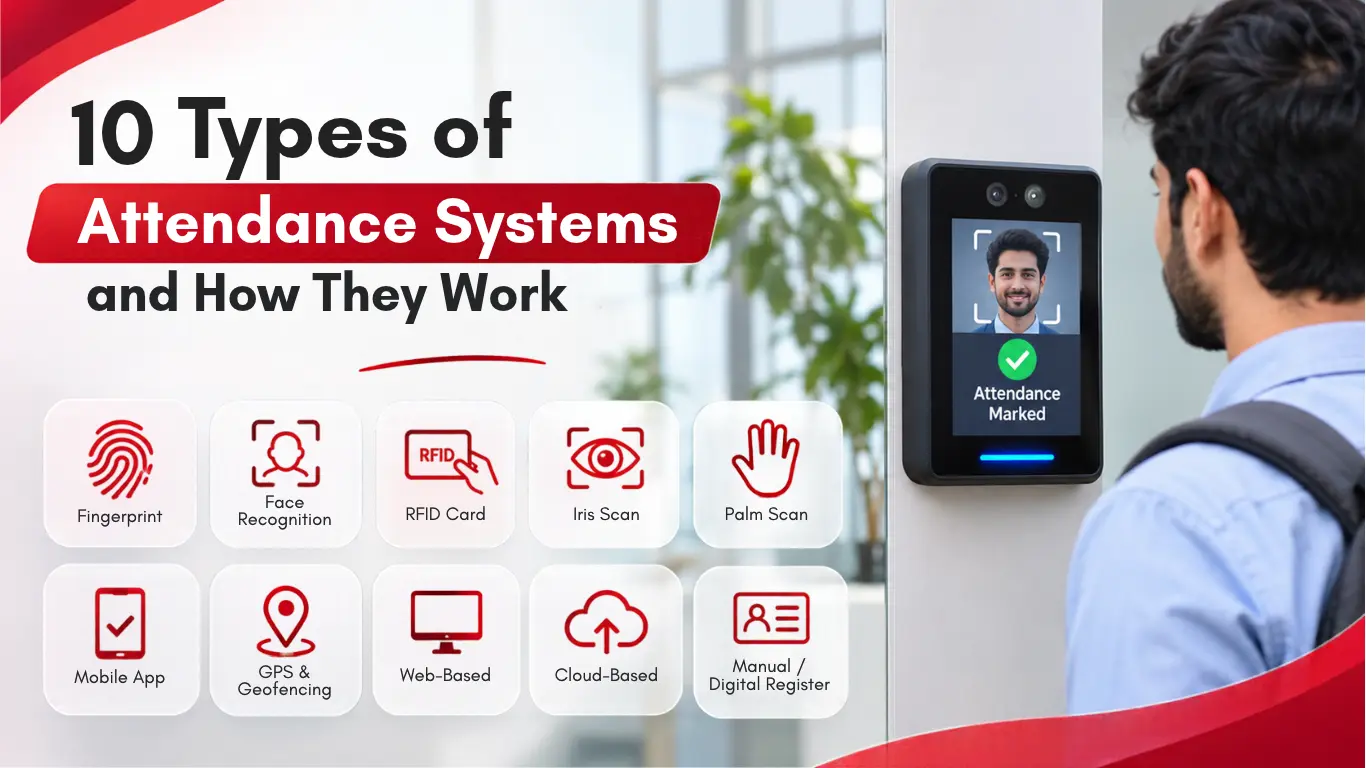
In this article, we will review 10 different types of employee attendance systems. We will break down how each system works and help businesses better understand what systems may be appropriate for their workplace.
What Is an Employee Attendance System?
An employee attendance system is a method or technology that helps companies record and manage attendance of their employees. It serves a myriad of purposes for businesses, from keeping attendance records to monitoring lateness and absences to calculating total working hours.
Attendance systems can connect to other HR and payroll software to further improve the organisation and management of employee attendance records.
There are various kinds of attendance systems based on the requirements of the workplace, from manual systems to biometric systems to card-based systems, mobile-based systems and software-based systems.
10 Different Types of Employee Attendance Systems
Employee attendance systems can boost the efficiency of your business by helping you to keep record of staff hours and track staff punctuality. You can choose an attendance solution based on your requirement from the plethora of solutions ranging from register or punch card systems to elaborate biometric systems, cloud-based applications and what have you. Each of these have their features, benefits and levels of accuracy. Knowing these can put you in a better position to choose the solution best suited for your business.
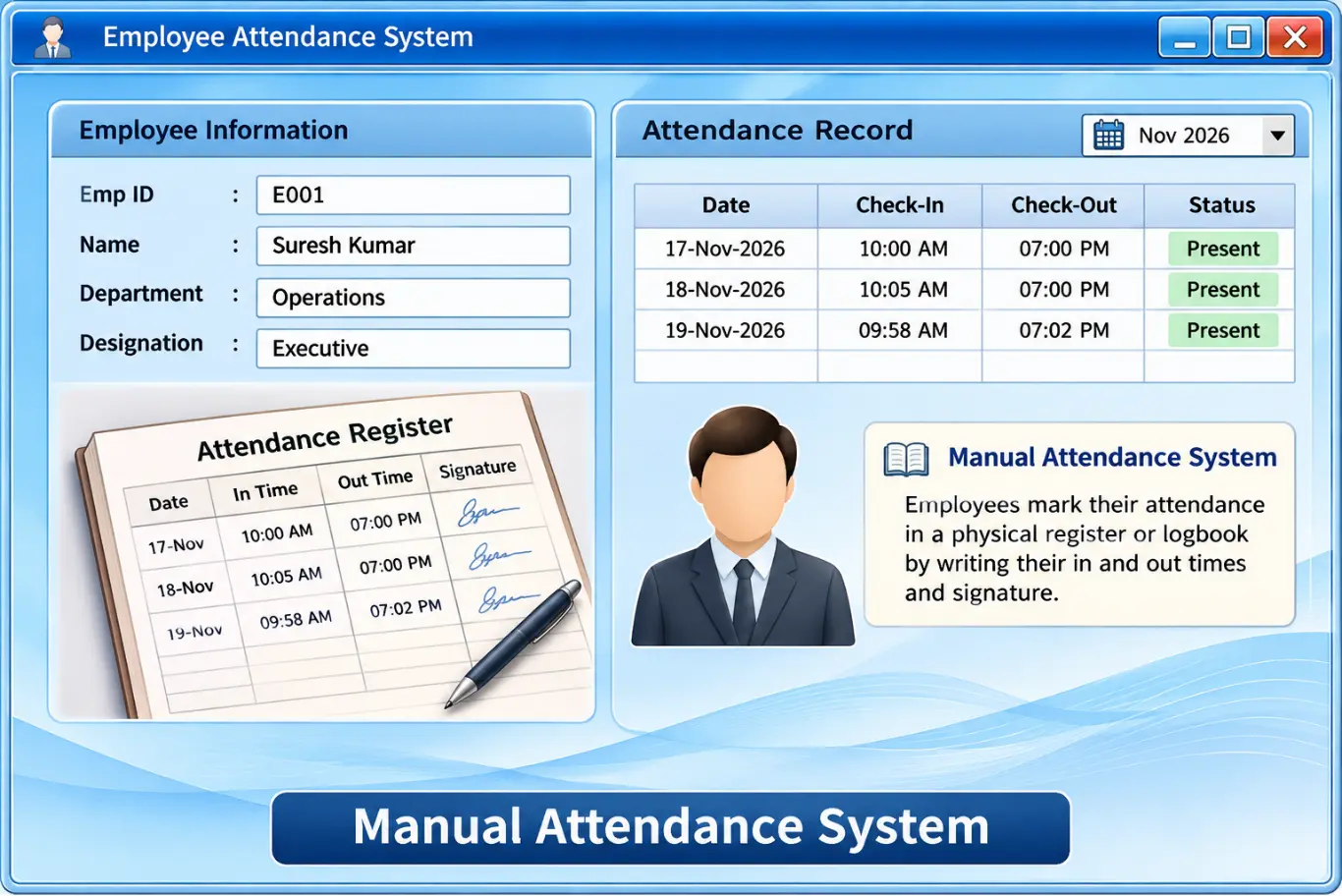
1. Manual Attendance System
A manual attendance system is a simple way to document employee attendance. Employees are required to sign in and sign out using an attendance register.
How Does It Work?
A member of the HR, supervisory or security staff is assigned the responsibility of maintaining a register. The employees are expected to manually fill in their arrival and departure times, which are later verified and edited by the HR staff.
Key Benefits
- It is straightforward and simple to implement.
- It does not require a significant start-up cost.
- It can be used in workplaces with very little or no office automation equipment.
However, there are a number of limitations to this method. For instance, the personnel documents may contain a number of errors and be very difficult to manage especially when the employee numbers increase.
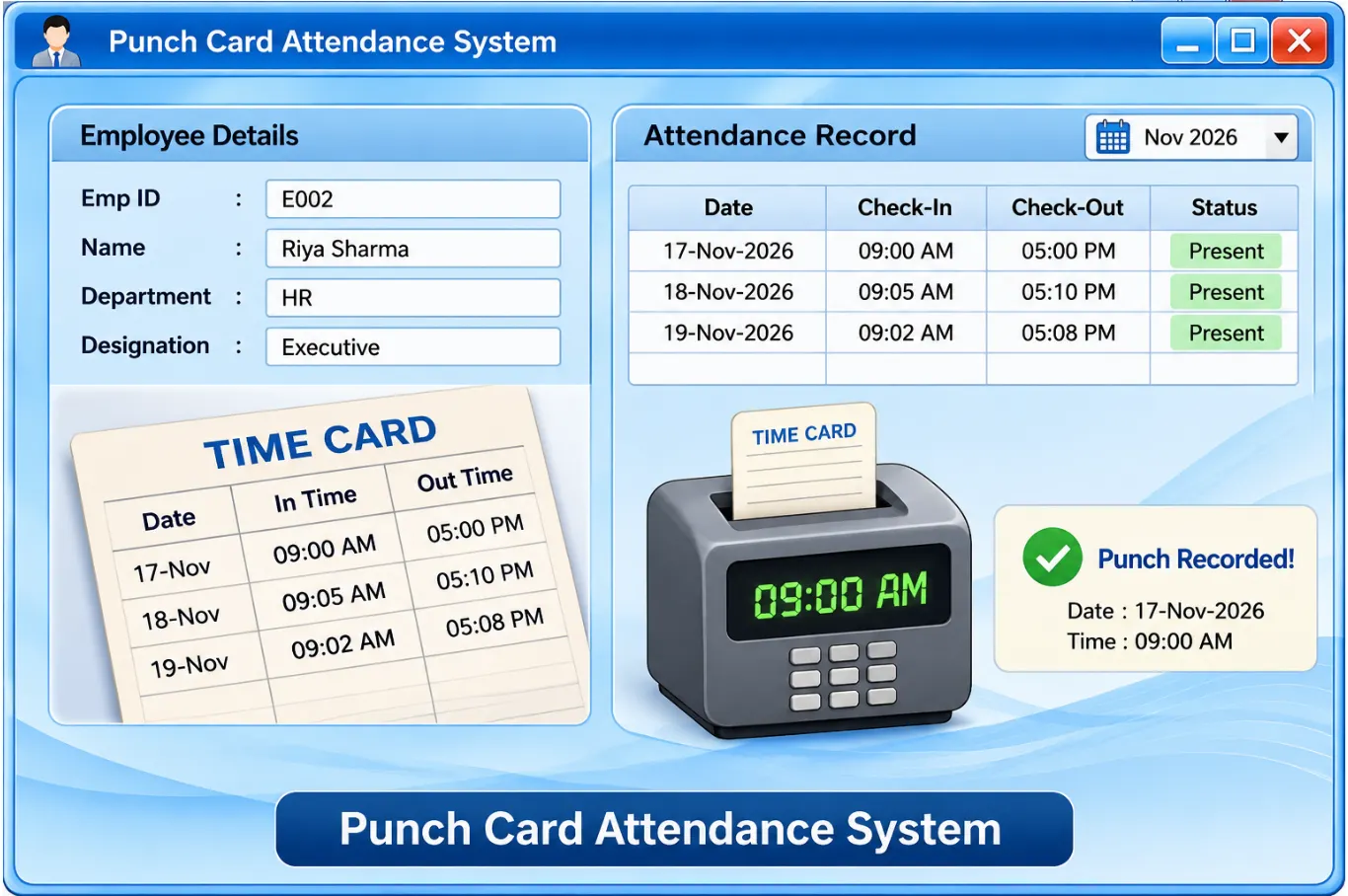
2. Punch Card Attendance System
A punch card attendance system is combined with a time clock and employee specific cards to generate attendance records. It is a traditional way of keeping attendance records.
How Does It Work?
A time clock is installed at the workplace. Employees use their individual cards to punch in and out to generate their attendance records.
Key Benefit
- A physical attendance record is generated.
- System is simple to use.
- It can be used in smaller workplaces.
The main restrictions are that employees may forget their cards or have someone else punch them in, and attendance information may need to be processed manually.
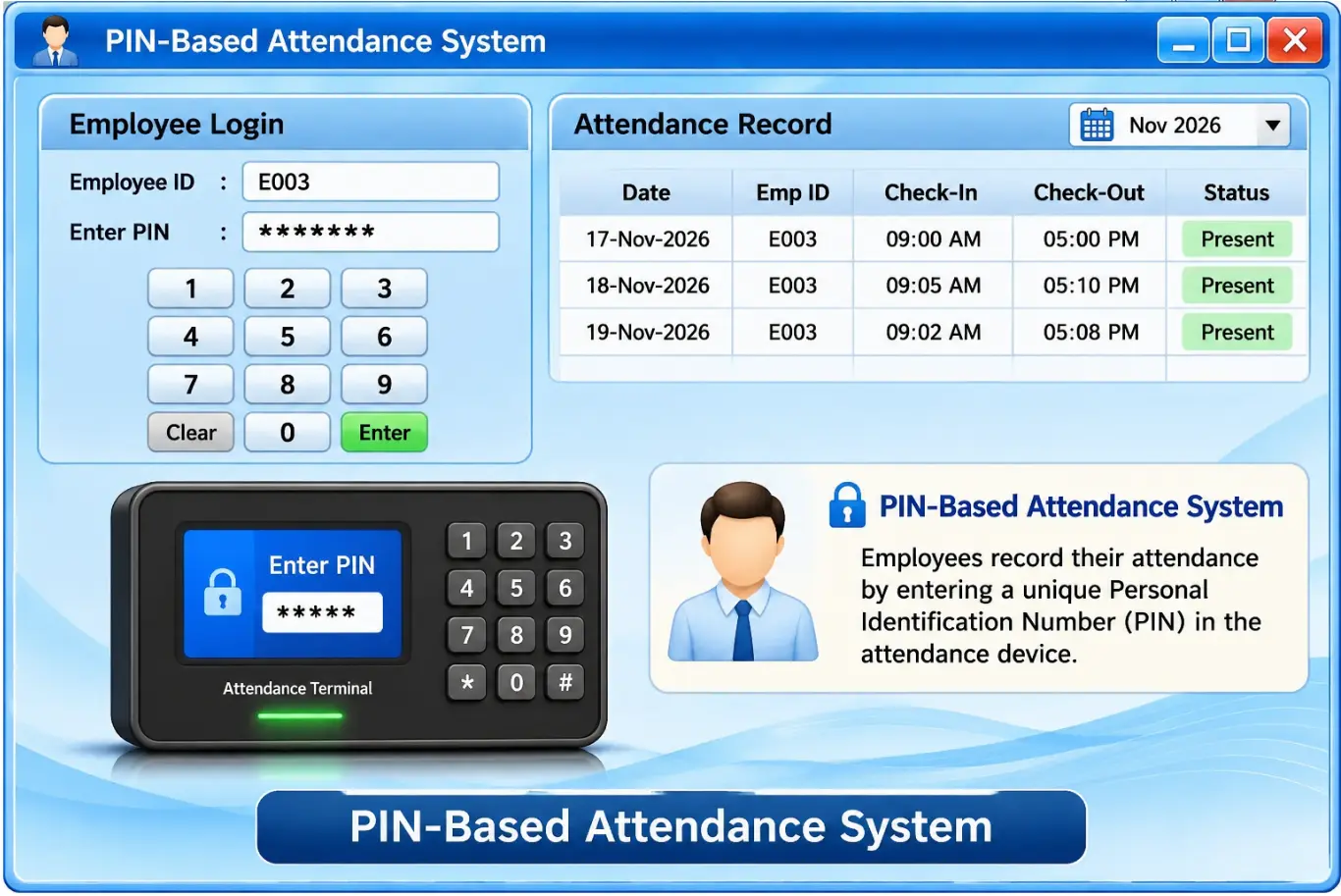
3. PIN-Based Attendance System
A PIN-based attendance system allows employees to record attendance using a unique PIN.
How it Works
A unique PIN is assigned to each employee. Employees are required to enter their PIN at the attendance terminal to record their attendance for the shift.
Main Benefits
- There is no requirement for fingerprint or facial recognition.
- No requirement for employees to carry attendance cards.
- It is simple to utilize in organizations with a registered employee database.
A PIN may be shared with other employees, increasing the risk of unauthorized attendance.
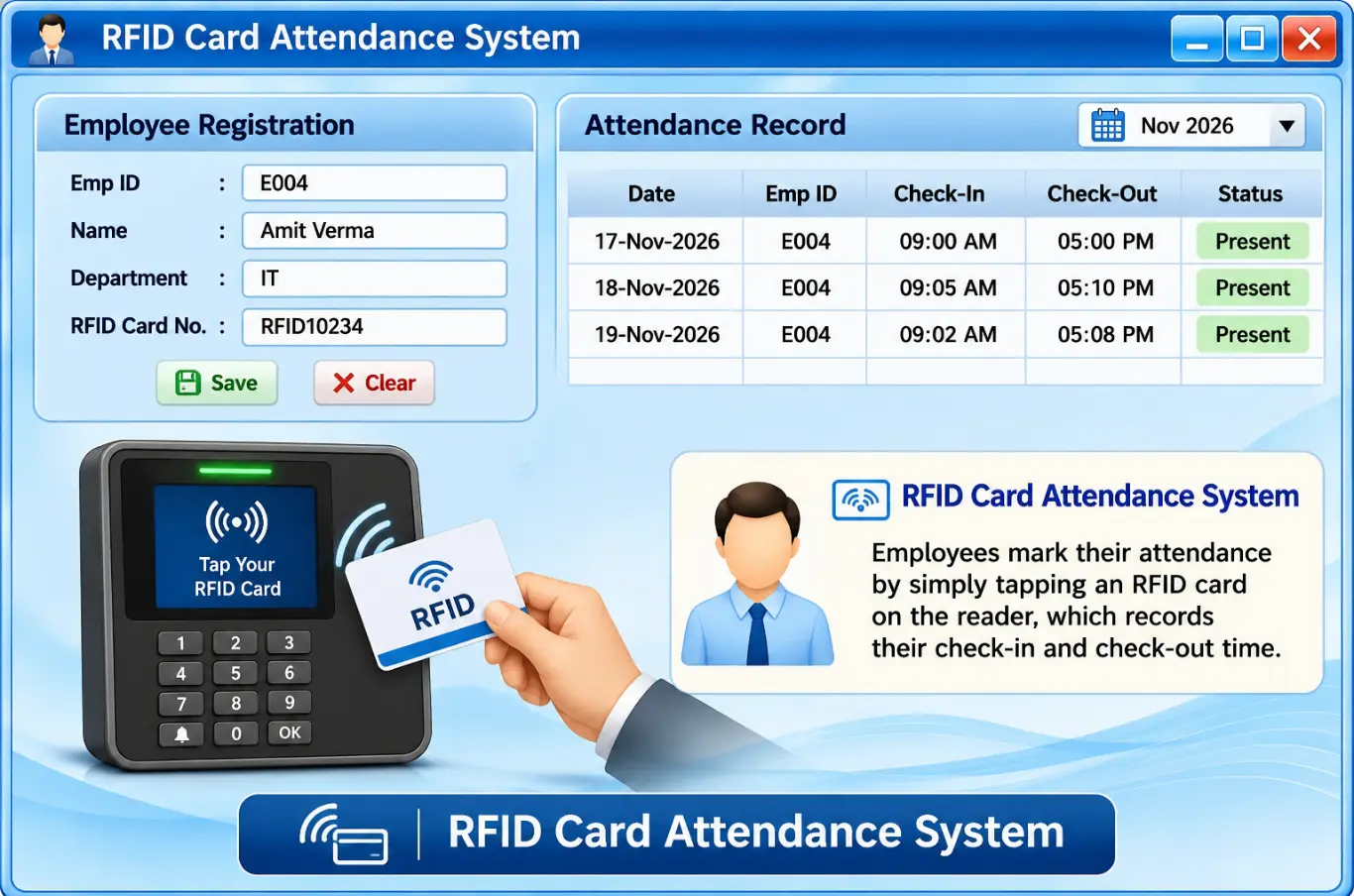
4. RFID Card Attendance System
RFID (Radio Frequency Identification) based systems utilize electronic cards or tags to identify employees. They are usually found in offices, commercial establishments, and other workplaces with restricted access.
How it Works
A unique RFID card is assigned to each employee. The attendance system records the attendance of an employee upon bringing the card closer to the RFID reader.
Main Benefits
- It provides quick and easy attendance recording.
- It is suitable for organizations with large employee strength.
- It can be integrated with an access control system.
- Lessens the need for manual attendance recording.
Employees must carry their cards for this system to work, and lost/shared cards may create problems for attendance management.
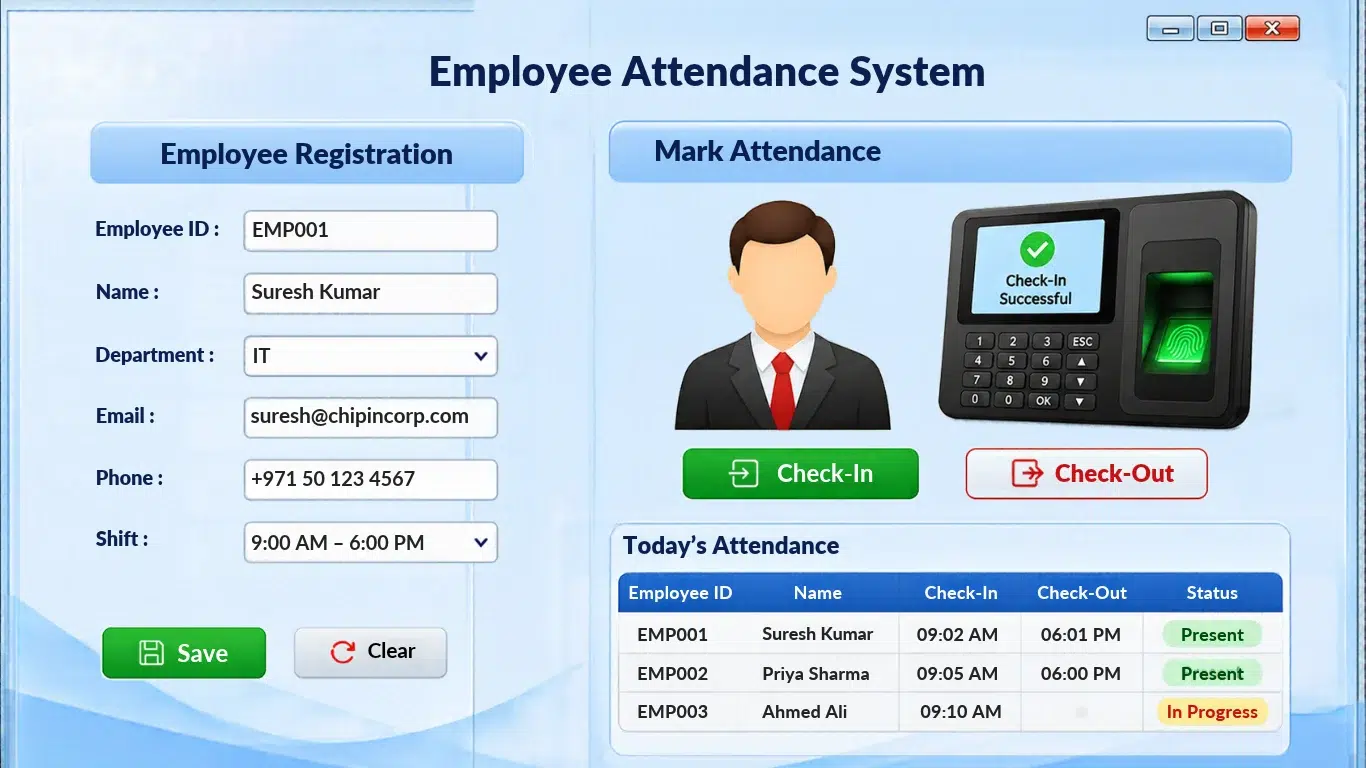
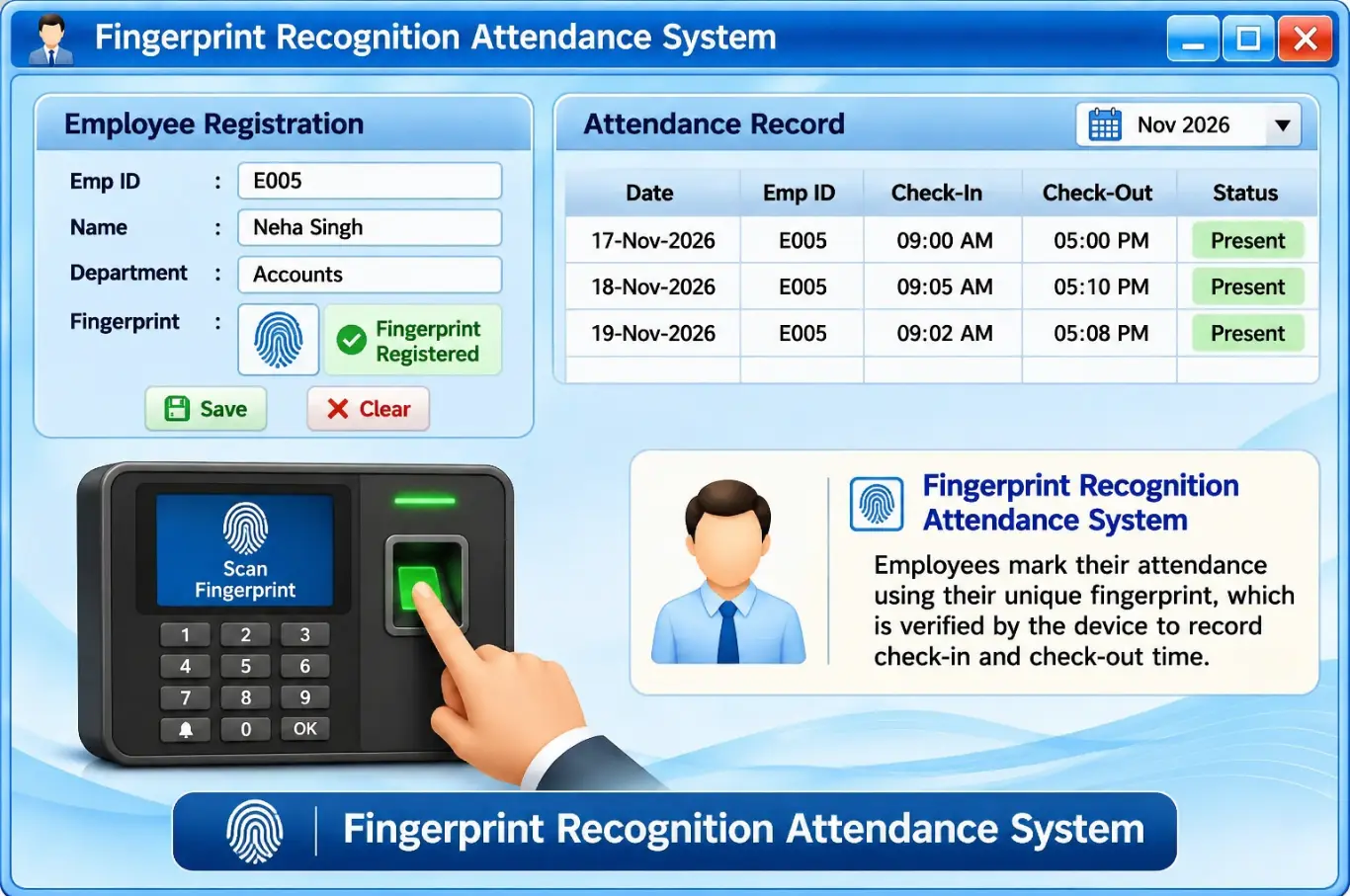
5. Fingerprint Recognition Attendance System
Fingerprint recognition is a type of biometric attendance technology. It uses the unique fingerprint patterns of employees to recognize them, as opposed to using physical cards or manually entered information.
How does it Work?
Employees first capture their fingerprint information on the device. To register attendance, an employee is required to place their finger on the scanner. The device checks if the fingerprint scanned is the same as the one captured and recorded on the device. If the verification is successful, then attendance is recorded.
Key Benefits:
- Prevents buddy punching.
- Individually verifies employees.
- Reduces manual errors in attendance.
- Supports automatic attendance report
Fingerprint based attendance systems are apt for controlled access environments, for example, offices, retail stores, warehouses, and others.
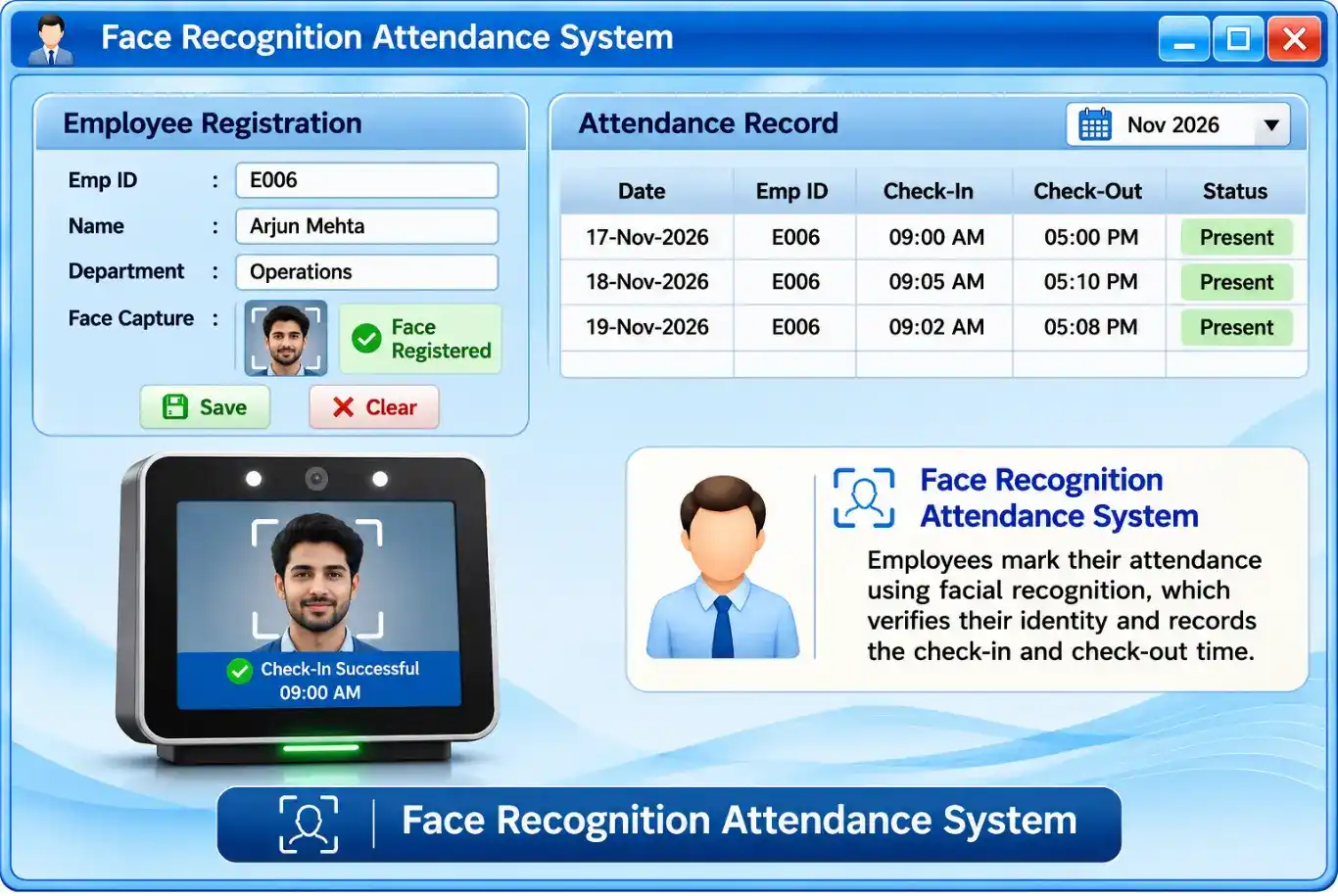
6. Face Recognition Attendance System
Face recognition systems use an individual’s facial features to recognize them. To implement this type of system, a camera is required to take a picture of an individual to recognize them.
How does it Work?
The employee’s facial information is first captured by the device. During check-in, a camera captures the employee’s face and is compared to the facial information captured by the device. If the identity is verified, the system records the attendance.
Some advanced devices support attendance fraud prevention by using face detection.
Key Benefits:
- Contactless attendance.
- Convenient for employees to use.
- Eliminates the need to depend on physical cards.
- Supports instant employee identification.
It is useful for contact less attendance management in offices, corporate and other similar establishments.
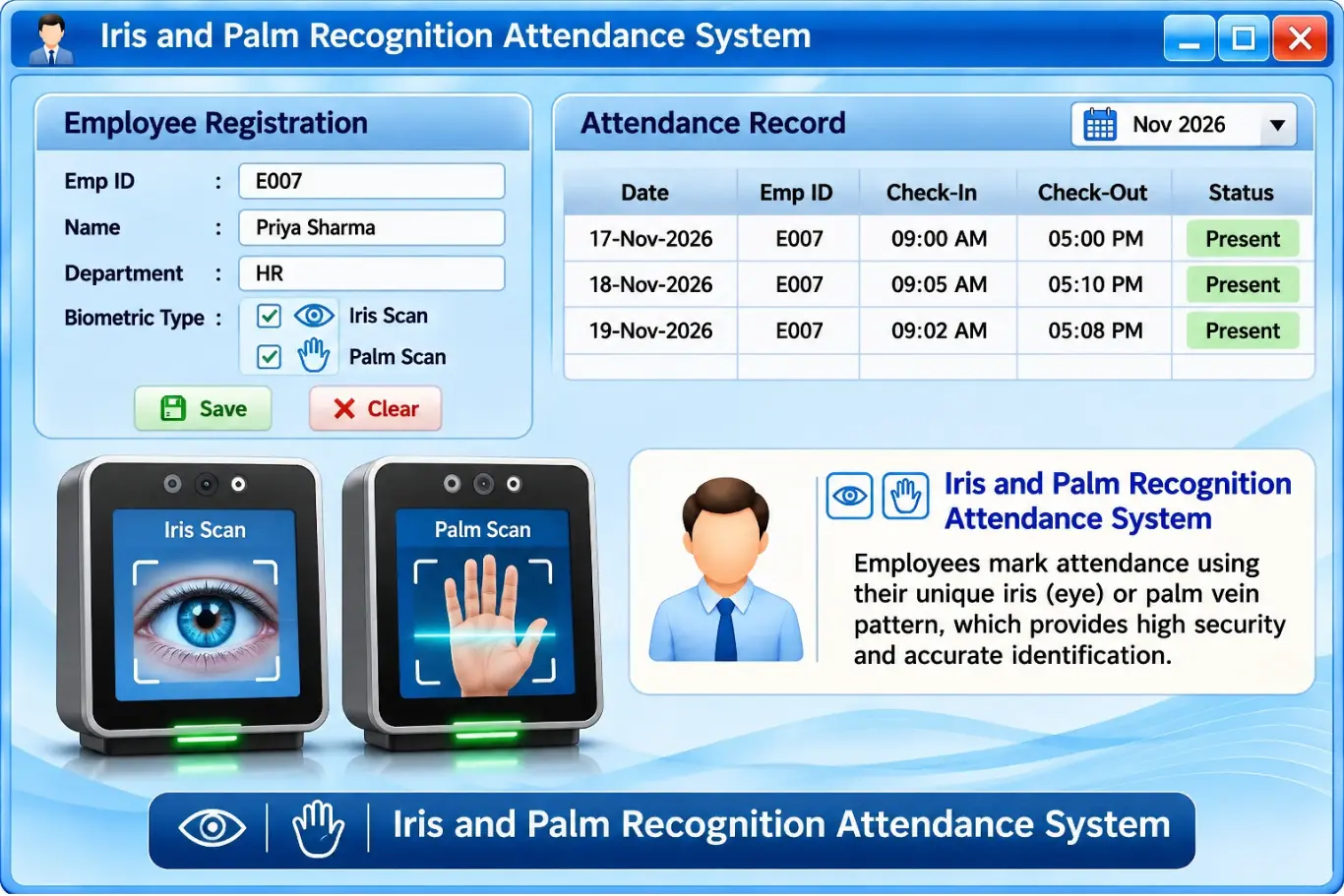
7. Iris and Palm Recognition Attendance Systems
The iris and palm recognition systems are other alternatives to fingerprint recognition systems. These are other ways through which organisations can biometrically verify employees.
How do they work?
In iris recognition, a device captures a picture of an employee’s iris, and compares it to previously captured iris pictures of that employee. In palm recognition, the system captures and compares a picture of a part of the employee’s palm, which may include palm veins, depending on the technology used in the device.
Once the system identifies the previously registered employee’s picture, it records the employee’s attendance.
Benefits
- Uses unique biometric characteristics of an employee.
- An alternative to verification based on fingerprints.
- Can be used in workplaces with specific security requirements.
Depending on the technology used, these systems may require higher installation costs and may require different employee registration processes.
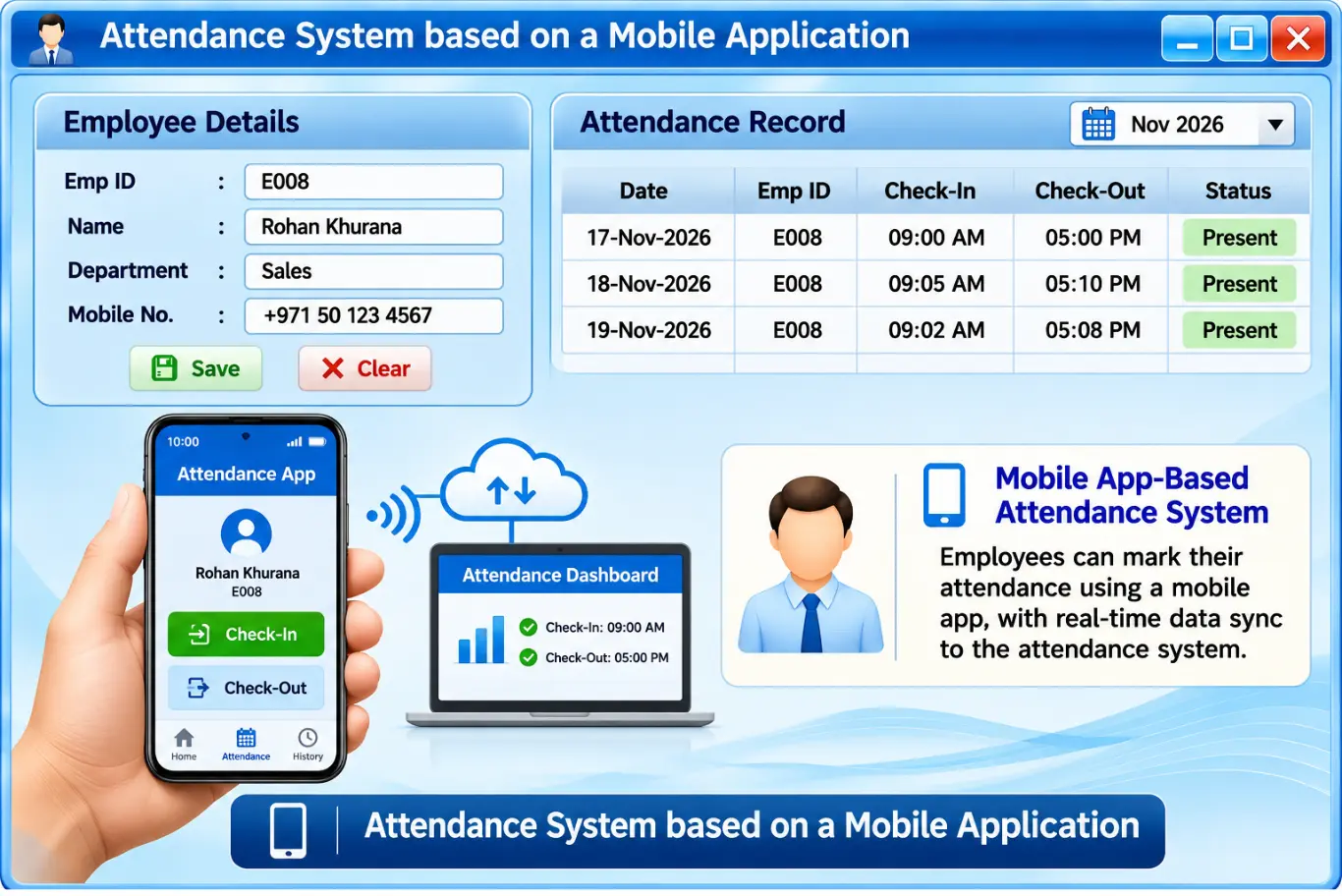
8. Attendance System based on a Mobile Application
The use of an employee’s mobile application to record attendance is increasingly gaining popularity. This is very helpful for employees who work away from an office or a fixed location.
How do they work?
An employee uses an authorized attendance application on their mobile phone to record their attendance. Some applications may also capture the device being used, the location of the employee and other metadata.
Benefits
- Employees in remote and field locations are no longer bound to record attendance using a physical attendance terminal.
- Employees can record and/or access attendance using their own devices.
- The applications can integrate with HR and/or Payroll systems.
9. GPS and Geofencing Attendance System
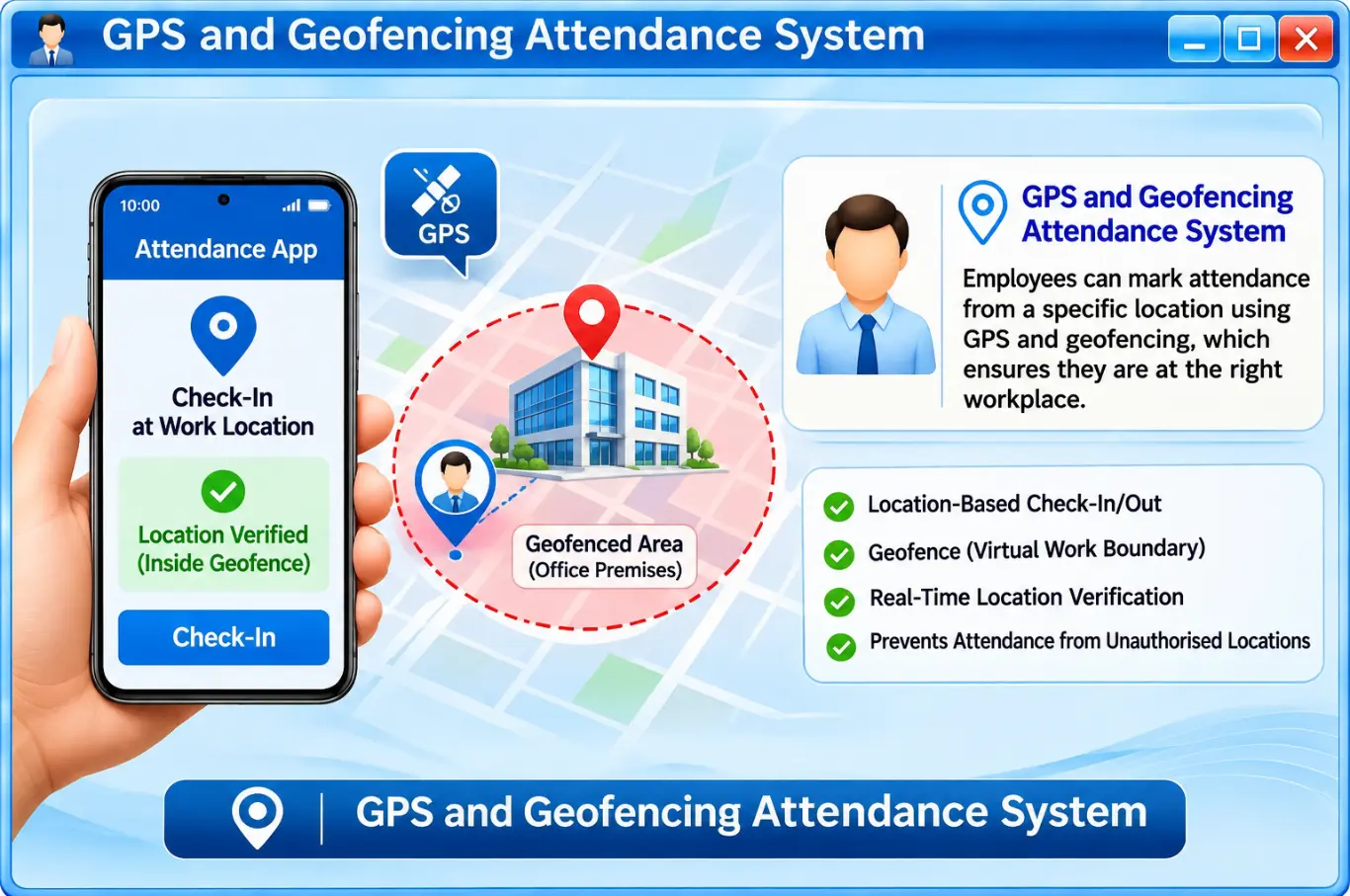
GPS attendance systems make use of the location information of the device to help businesses understand where the employee is punching their attendance. With geofencing, a virtual geographical boundary is set around a workplace or an approved location.
How does it work?
An authorized employee, using the attendance application, records their check-in. The system captures the location of the device using GPS and checks if the location is within the approved geographical area.
A company, for example, can set an approved attendance area around their Dubai office or construction site.
Benefits:
- Useful for field employees and distributed teams.
- Helps confirm attendance at approved workplace locations.
- Accommodates multiple workplace locations.
- Eliminates the need for employees to go to a centralized attendance terminal.
GPS accuracy may vary due to environmental conditions, settings of the device, and the availability of the network.
10. Web-based and Cloud-based Attendance Systems
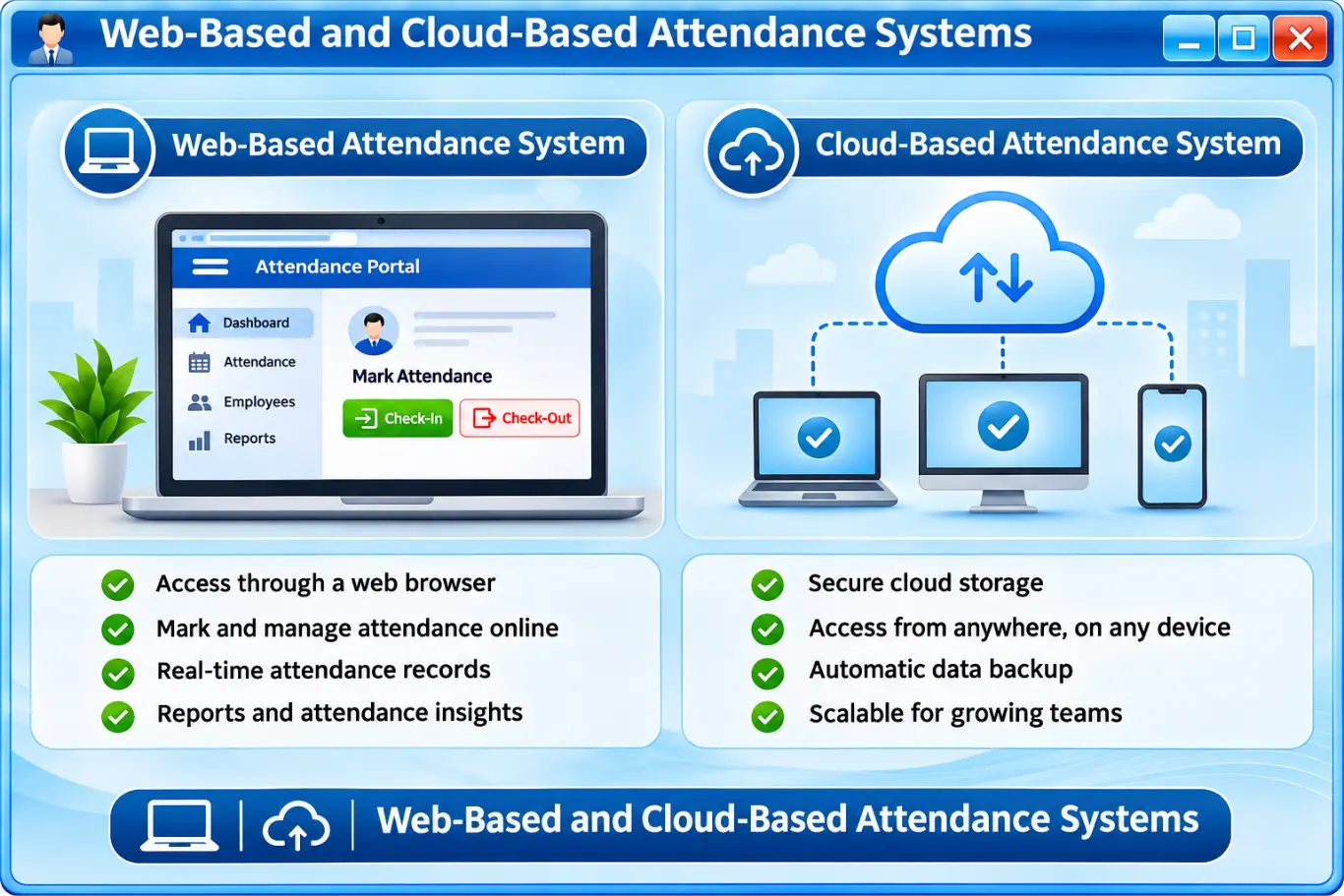
Web-based and cloud-based attendance systems enable businesses to manage employee attendance via web-based platforms. These systems can capture information from different sources, such as web browsers, mobile apps, and biometric devices.
How It Works
Employees can log their attendance through an authorized platform or device. Attendances logged by the employees are stored and processed by the attendance software. Authorized managers can view and access attendance information, working hours, leaves and reports.
Main Advantages
- Centralized attendance management.
- Attendance reports available from any location.
- Ease of managing multiple branches.
- Integration with HR and payroll software.
- Reduced dependence on manual record keeping.
These systems are appropriate for businesses that have larger and growing workforces with multiple office locations.
Comparison of Different Employee Attendance Systems
Each attendance method offers different features and capabilities. The right option depends on employee strength, workplace location, security requirements and available infrastructure.
It is important to understand that these methods are not always mutually exclusive. For example, a cloud-based attendance platform can receive information from fingerprint terminals, face recognition devices and mobile applications.
Benefits of Using an Automated Employee Attendance System
Automated attendance systems provide many advantages for businesses by facilitating the management of employees’ working hours. Organizations can now collect attendance information using digital devices and software, which allows for a reduction in the reliance on manual registers.
More accurate records are perhaps the most noteworthy benefits of using automated attendance systems. With these systems, the administrative burden of maintaining attendance registers is alleviated because employees are automatically recorded when they check in or check out.
These systems also give the HR function the ability to identify lateness, early departures and absences and help them generate a report showing attendance, overtime, and/or leave.
The information may be integrated with the company’s payroll and HR management systems to facilitate calculations of employees’ salary based on the attendance, leave, and overtime worked.
For businesses with branches across different Emirates, it allows them to have an integrated system to centralise the management and control of attendance for their employees across different branches.
How to Choose the Right Employee Attendance System for Your Business in Dubai?
Choosing an attendance system depends on how your employees work and what your organisation needs.
When your workforce is small, a simple fingerprint or RFID based attendance system can suffice. For a contactless verification system, face recognition can be used. For workforces in different locations, a system that works on a mobile platform with GPS and Geofencing can be used.
Before making a decision on the system to use, look into the following:
Size of Workforce: The solution should be flexible enough to adapt to the current workforce and the future growth of the business.
Identification Methods: Look into available methods of fingerprint, face recognition, RFID and other verification methods.
Integration: See if the system is compatible with your existing HR, Payroll and Access Control systems.
Reports: Look for management features of shifts and overtime, and employee records.
Data Security: Check how the employee data and biometric information is stored, accessed and protected.
Support: Check what post-sales support and maintenance is offered.
The solution should be aligned with the business and its operations rather than the solution with the most features.
Conclusion
Attendance systems have changed from traditional registers and punch cards. They have transformed into biometric systems and cloud-based management systems. Systems differ in their impact based on how a business manages its workforce.
Several businesses rely on administrative staff to capture employee attendance using conventional methods e.g. fingerings or manual registers.
When adopting an attendance solution for your business in Dubai or the UAE, you need to take into account your employees’ needs, level of security required in the workplace, the software’s flexibility and its long-term potential for growth and expansion. Many businesses rely on outdated attendance solutions which leave workforce management disorganised and disrupt operations. A suitable solution can address these challenges.
Frequently Asked Questions (FAQs)
About the Author