Blogs by Chipin

What Are Managed IT Services? A Complete Guide for Dubai Businesses

What Are Managed IT Services A Complete Guide for Dubai Businesses

Technology is at the heart of every successful business. Whether it’s sending emails, managing customer data, collaborating with teams, or running business applications, companies rely on their IT infrastructure every day. But when systems fail, servers go down, or cyber threats strike, productivity comes to a halt, and even a few hours of downtime can result in lost revenue and frustrated customers. 

Many businesses in Dubai still follow a reactive approach, calling an IT technician only when something goes wrong. While this may solve the immediate issue, it doesn’t prevent future problems or protect the business from unexpected disruptions. 

That’s where Managed IT Services make a real difference. 

Instead of waiting for IT issues to occur, a managed IT service provider continuously monitors, maintains, and secures your entire IT environment. From network management and cybersecurity to Microsoft 365, cloud solutions, Windows Server management, and help desk support, everything is handled proactively to keep your business running efficiently. 

Whether you’re a startup, an SME, or a large enterprise, Managed IT Services help reduce downtime, strengthen security, improve productivity, and give you access to experienced IT professionals without the cost of maintaining a full in-house IT team. 

In this guide, you’ll learn what Managed IT Services are, what’s included, how they benefit businesses in Dubai, and how to choose the right IT partner for your organization. 

What Are Managed IT Services?

What Are Managed IT Services

Managed IT Services are a proactive approach to managing and supporting an organization’s technology infrastructure. Instead of fixing problems only after they occur, a Managed IT Service Provider (MSP) continuously monitors, maintains, and optimizes your IT systems to prevent issues before they impact your business. 

A managed IT provider becomes an extension of your business, taking care of your day-to-day technology needs while your team focuses on core operations. This includes monitoring servers, maintaining networks, managing cloud services, securing business data, supporting employees, and ensuring your IT environment remains reliable and up to date. 

Unlike the traditional break-fix model, where businesses pay for support only when something fails, Managed IT Services focus on prevention. Regular system monitoring, software updates, security patching, and performance optimization help minimize downtime, reduce security risks, and improve overall business efficiency. 

For businesses in Dubai, where technology plays a vital role in daily operations, Managed IT Services provide a cost-effective way to access expert IT support, advanced cybersecurity, and scalable technology solutions without investing in a large in-house IT department. 

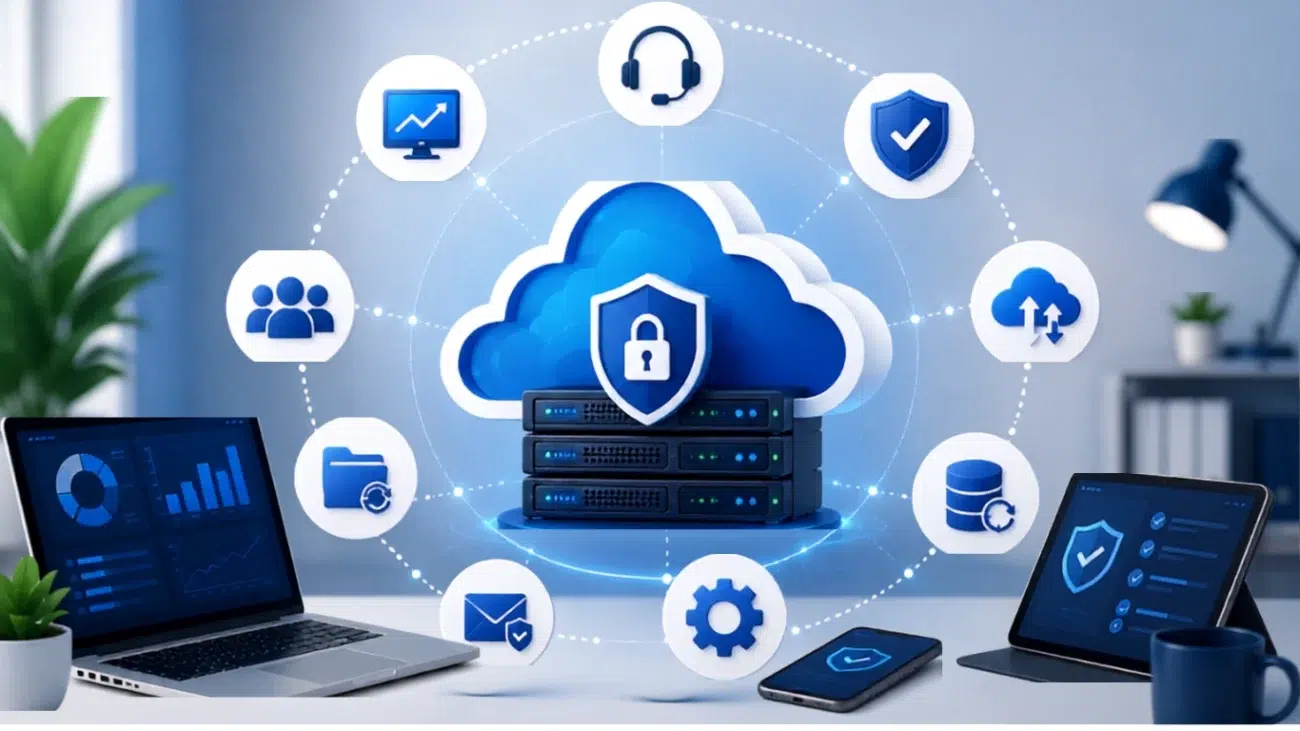
A comprehensive Managed IT Services plan typically includes: 

  • 24/7 IT monitoring
  • Help desk and technical support
  • Network monitoring and management
  • Windows Server management
  • Microsoft 365 administration
  • Cloud management
  • Cybersecurity services
  • Data backup and disaster recovery
  • Endpoint and device management

By partnering with a trusted Managed IT Service Provider, businesses can improve system reliability, enhance security, control IT costs, and ensure their technology supports long-term business growth.

Why Are Managed IT Services Important for Businesses in Dubai?

Dubai is one of the world’s fastest-growing business destinations, where companies depend on technology to manage daily operations, communicate with customers, and stay competitive. From small startups to large enterprises, businesses rely on stable networks, cloud applications, and secure IT systems to keep everything running smoothly. 

However, technology is becoming more complex. Cyber threats are increasing, employees expect seamless remote access, and customers expect uninterrupted service. A single server failure, network outage, or ransomware attack can disrupt operations, damage your reputation, and result in significant financial losses. 

This is why many organizations are moving away from the traditional break-fix model and investing in Managed IT Services. Instead of waiting for problems to occur, businesses choose proactive IT management that keeps systems secure, updated, and running efficiently around the clock.

Reduced Downtime

Unexpected downtime affects employee productivity, customer satisfaction, and business revenue. Managed IT providers continuously monitor your IT infrastructure to detect and resolve issues before they become major problems, helping your business operate without unnecessary interruptions. 

Stronger Cybersecurity

Cybercriminals constantly target businesses of all sizes. Managed IT Services help protect your organization through proactive security measures such as firewall management, endpoint protection, email security, vulnerability assessments, security updates, and continuous monitoring. 

Predictable IT Costs

Hiring and maintaining a full in-house IT team can be expensive, especially for small and medium-sized businesses. Managed IT Services provide access to experienced IT professionals through a predictable monthly plan, making budgeting easier while reducing unexpected IT expenses.

Access to Experienced IT Professionals

Technology changes rapidly, and keeping up with the latest security threats, cloud technologies, and infrastructure updates requires specialized knowledge. A Managed IT Service Provider gives your business access to certified professionals with expertise in networking, Microsoft 365, Windows Server, cybersecurity, cloud platforms, and business IT support. 

Improved Business Productivity

When employees don’t have to deal with slow computers, network issues, or recurring technical problems, they can focus on their work instead of waiting for IT issues to be resolved. A well-managed IT environment improves collaboration, efficiency, and overall productivity.

Scalable IT Solutions

As your business grows, your technology requirements also change. Whether you’re opening a new office, hiring more employees, or adopting new business applications, Managed IT Services can scale with your business without the need for major infrastructure investments.

Business Continuity and Disaster Recovery

Unexpected events such as hardware failures, cyberattacks, or accidental data loss can happen at any time. Managed IT providers implement secure backup and disaster recovery solutions to ensure your critical business data can be restored quickly, minimizing disruption and helping your business continue operating.

What Is Included in Managed IT Services?

A reliable Managed IT Services plan covers much more than fixing computers or responding to technical issues. It provides end-to-end support that keeps your entire IT environment secure, efficient, and ready to support your business goals. 

While the exact services may vary depending on your business needs, most Managed IT Service Providers in Dubai offer the following core services.

1. 24/7 IT Help Desk Support

Technical issues can occur at any time, and even a small problem can interrupt business operations. A dedicated help desk ensures employees receive quick assistance whenever they experience issues with computers, email, printers, software, or business applications. 

Whether support is provided remotely or on-site, fast response times help reduce downtime and keep your team productive. 

2. Network Monitoring and Management

Your network connects employees, devices, applications, and business data. If the network becomes slow or unstable, every department is affected. 

Managed IT providers continuously monitor network performance, identify potential issues, and optimize your infrastructure to ensure reliable connectivity and maximum uptime. 

This typically includes: 

  • Network health monitoring
  • Switch and firewall management
  • Wi-Fi optimization
  • VPN configuration
  • Performance monitoring

3. Server Management

Servers are the backbone of many business operations. They store important files, host applications, manage user access, and support daily workflows. 

Managed IT Services ensure your servers remain secure, updated, and operating efficiently through regular maintenance, monitoring, security updates, and performance optimization. 

This helps reduce unexpected outages while improving reliability.

4. Microsoft 365 Management

Many businesses depend on Microsoft 365 for email, file sharing, communication, and collaboration. Managing users, licenses, permissions, and security settings can become challenging as organizations grow. 

A Managed IT provider helps configure, manage, secure, and support Microsoft 365, ensuring employees can work efficiently while business data remains protected. 

Services often include: 

  • Microsoft 365 administration
  • User and license management
  • Email support
  • Microsoft Teams support
  • SharePoint management
  • Security configuration

5. Cybersecurity Services

Cybersecurity is no longer optional for businesses. From phishing emails and ransomware attacks to data breaches, organizations face new threats every day. 

Managed IT providers implement multiple layers of security to reduce risk and protect business-critical information. 

These services may include: 

  • Endpoint protection
  • Firewall management
  • Email security
  • Multi-factor authentication (MFA)
  • Security monitoring
  • Patch management
  • Vulnerability assessments

6. Cloud Services Management

Cloud technology allows employees to work securely from anywhere while improving collaboration and flexibility. 

Managed IT providers assist businesses with cloud migration, cloud management, storage optimization, and ongoing monitoring to ensure cloud environments remain secure, reliable, and cost-effective.

7. Backup and Disaster Recovery

Data loss can occur because of hardware failure, cyberattacks, accidental deletion, or natural disasters. 

Managed IT Services include automated backup solutions and disaster recovery planning so your business can recover important data quickly and continue operating with minimal disruption. 

A strong backup strategy helps protect both your business operations and customer trust. 

8. Endpoint and Device Management

Every laptop, desktop, and mobile device connected to your network can become a security risk if it’s not properly managed. 

Managed IT providers keep devices updated, secure, and compliant by monitoring system health, deploying software updates, managing antivirus protection, and maintaining an accurate inventory of business assets. 

This reduces security risks while improving the overall performance of your IT environment. 

Benefits of Managed IT Services for Businesses

Benefits of Managed IT Services for Businesses

Technology should help your business grow, not slow it down. The right Managed IT Services provider doesn’t just solve technical problems—they create an IT environment that supports productivity, security, and long-term business growth. 

Here are some of the biggest benefits businesses experience after partnering with a Managed IT Service Provider. 

Minimize Downtime

Every minute of downtime affects your employees, customers, and revenue. Whether it’s a server failure, internet outage, or software issue, interruptions can quickly become expensive. 

Managed IT Services continuously monitor your systems, identify potential issues early, and resolve them before they impact your operations. This proactive approach helps keep your business running without unnecessary disruptions. 

Improve Cybersecurity

Cyber threats continue to evolve, making security one of the biggest concerns for businesses today. 

A Managed IT provider strengthens your security with regular updates, firewall management, endpoint protection, email security, and continuous monitoring. Instead of reacting after an attack, your business is protected through preventive security measures.

Reduce IT Costs

Maintaining an in-house IT department involves salaries, training, software licenses, infrastructure, and emergency repair costs. 

Managed IT Services provide access to a team of experienced professionals through a predictable monthly service plan. This helps businesses control IT spending while receiving expert support whenever it’s needed.

Increase Employee Productivity

Employees perform better when technology works as expected. 

With fewer technical issues, faster support, and reliable systems, your team spends less time waiting for problems to be fixed and more time focusing on their work. Better productivity leads to improved customer service and stronger business performance.

Access to Specialized Expertise

Technology changes rapidly, and staying updated requires specialized knowledge across multiple areas. 

A Managed IT Service Provider gives your business access to professionals experienced in network infrastructure, Microsoft 365, Windows Server, cybersecurity, cloud computing, and IT strategy—all without hiring multiple specialists. 

Scalable IT Support

As your business grows, your technology requirements change. 

Whether you’re opening a new office, adding employees, moving to the cloud, or expanding your operations, Managed IT Services can easily scale to meet your evolving business needs. 

Better Compliance and Data Protection

Many industries must comply with strict regulations for handling customer and business data. 

Managed IT providers help businesses implement security policies, manage software updates, maintain secure backups, and reduce risks that could lead to compliance issues or data breaches. 

Focus on Business Growth

Business owners shouldn’t have to spend their day troubleshooting technical issues. 

By outsourcing day-to-day IT management, leadership teams can focus on improving operations, serving customers, and growing the business while experienced IT professionals take care of the technology. 

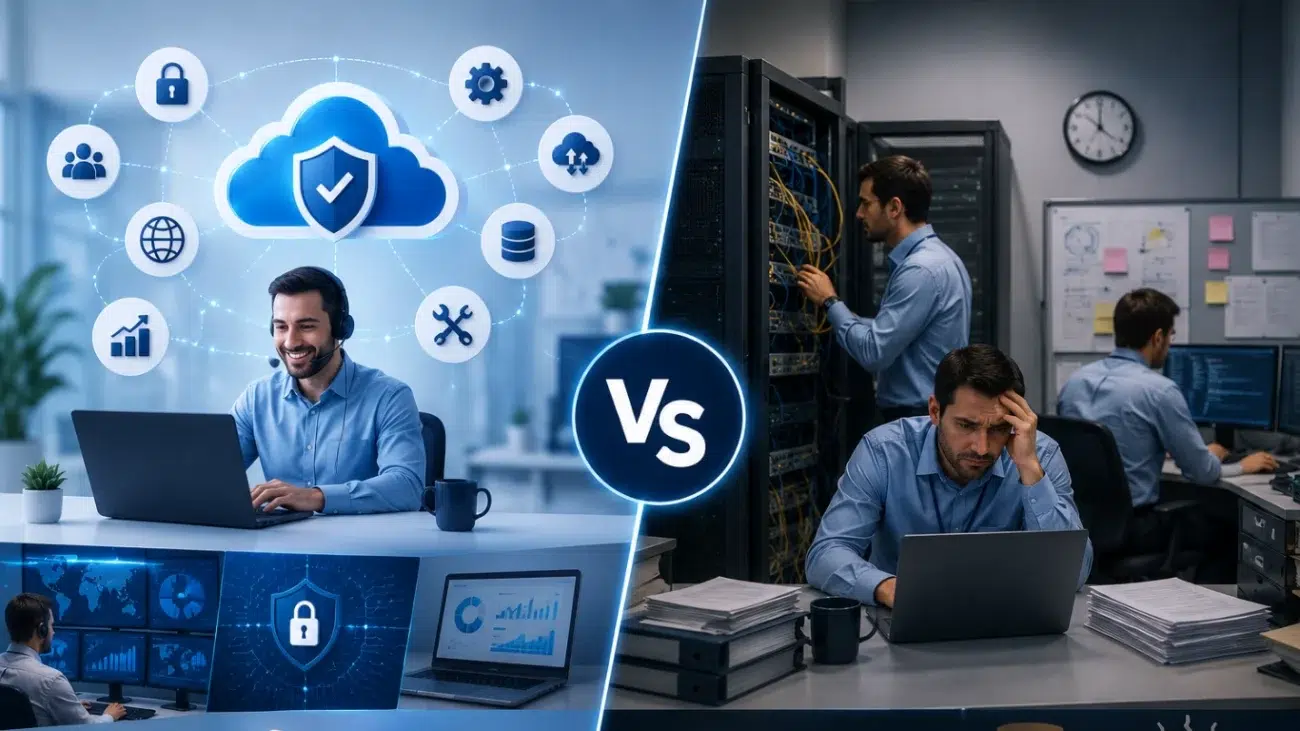
Managed IT Services vs. In-House IT Team

Managed IT Services vs. In-House IT Team

One of the most common questions business owners ask is whether they should build an in-house IT team or outsource their IT management to a Managed IT Service Provider. The answer depends on your business size, budget, and long-term goals. 

For many small and medium-sized businesses in Dubai, maintaining a full-time IT department can be expensive and difficult. Hiring skilled professionals, investing in training, purchasing software, and managing IT operations internally often requires significant time and resources. 

Managed IT Services offer a practical alternative by providing access to a team of experienced IT professionals without the overhead of recruiting and maintaining an internal department. 

Feature

Managed IT Services

In-House IT Team

IT Support 

24/7 monitoring and support 

Limited to office hours 

Cost 

Fixed monthly pricing 

Salaries, training, and infrastructure costs 

Expertise 

Access to specialists in multiple technologies

Depends on the skills of the internal team

Scalability 

Easy to scale as your business grows

Hiring additional staff takes time and investment

Cybersecurity 

Proactive security monitoring and updates 

May require additional security resources 

Business Continuity 

Continuous monitoring and disaster recovery planning

Depends on available internal resources 

Latest Technology 

Access to current tools and industry best practices 

Continuous training and upgrades required 

Which Option Is Right for Your Business?

An in-house IT team may be suitable for large organizations with complex IT environments and dedicated budgets for technology management. 

However, Managed IT Services are often the better choice for startups, SMEs, and growing businesses that want reliable IT support, stronger cybersecurity, and predictable costs without the responsibility of managing a full internal IT department. 

By partnering with an experienced Managed IT Service Provider, businesses gain access to a complete team of IT professionals who can monitor systems, resolve issues quickly, improve security, and support future growth—allowing internal teams to focus on strategic business objectives rather than day-to-day technical challenges. 

7 Signs Your Business Needs Managed IT Services

7 Signs Your Business Needs Managed IT Services

Many businesses don’t realize they need Managed IT Services until a major IT issue disrupts their operations. Frequent technical problems, security concerns, or increasing IT costs are often signs that your current approach is no longer enough. 

If you recognize any of the following situations, it may be time to consider partnering with a Managed IT Service Provider. 

1. Your Team Faces Frequent IT Problems

If employees regularly experience slow computers, network interruptions, software crashes, or email issues, productivity suffers. Instead of constantly reacting to problems, managed IT services help identify and resolve the root causes before they affect your business.

2. Your Business Is Growing

As your company expands, so do your IT requirements. More employees, additional devices, cloud applications, and multiple office locations require a stronger and more scalable IT infrastructure. 

Managed IT Services ensure your technology grows alongside your business without creating unnecessary complexity. 

3. Cybersecurity Is Becoming a Concern

Cyberattacks are increasing every year, and businesses of every size are potential targets. If your organization lacks regular security monitoring, endpoint protection, or data backup, your business may be exposed to unnecessary risks. 

A Managed IT provider helps strengthen your security with proactive monitoring and modern security practices. 

4. Your Internal IT Team Is Overloaded

Even experienced internal IT teams can struggle to manage daily support requests while handling infrastructure upgrades, cybersecurity, cloud management, and strategic projects. 

Managed IT Services can work alongside your existing IT team, allowing them to focus on business-critical initiatives while routine maintenance and monitoring are handled externally.

5. IT Costs Are Becoming Unpredictable

Unexpected server failures, emergency repairs, and hardware replacements often lead to unplanned expenses. 

With Managed IT Services, businesses benefit from predictable monthly pricing, making it easier to control IT budgets while reducing costly emergencies. 

6. You Need Reliable Backup and Disaster Recovery

Business data is one of your most valuable assets. If your organization doesn’t have automated backups or a tested disaster recovery plan, recovering from hardware failures or cyberattacks can be difficult. 

Managed IT providers help ensure your critical data is securely backed up and can be restored quickly when needed.

7. You're Spending More Time Managing IT Than Growing Your Business

Technology should support your business—not distract you from running it. 

If you’re constantly coordinating with different vendors, resolving technical issues, or worrying about system performance, it’s a clear sign that your business could benefit from professional IT management. 

Partnering with a Managed IT Service Provider allows you to focus on serving customers, improving operations, and growing your business while experienced IT professionals take care of your technology. 

Industries That Benefit from Managed IT Services

Managed IT Services are not limited to a specific industry. Any business that relies on computers, networks, cloud applications, or business data can benefit from professional IT management. Whether you’re a growing startup or an established enterprise, having reliable IT support helps improve efficiency, strengthen security, and reduce operational risks. 

Here are some of the industries that benefit the most from Managed IT Services in Dubai.

Healthcare

Healthcare organizations rely on secure and uninterrupted access to patient records, medical applications, and communication systems. Even a short period of downtime can affect patient care and daily operations. 

Managed IT Services help healthcare providers maintain secure systems, protect sensitive data, and ensure critical applications remain available when needed.

Retail

Retail businesses depend on POS systems, inventory software, payment gateways, and customer databases. Technical issues during business hours can directly impact sales and customer experience. 

With proactive monitoring and ongoing support, Managed IT Services help retailers keep their operations running smoothly while reducing the risk of unexpected disruptions. 

Finance and Accounting

Financial organizations manage confidential customer information and must maintain high levels of security and reliability. 

Managed IT Services provide secure infrastructure, regular system updates, backup solutions, and cybersecurity measures that help protect sensitive financial data.

Construction

Construction companies often operate across multiple project sites and require reliable communication between field teams and office staff. 

Managed IT Services support secure remote access, cloud collaboration, document sharing, and mobile workforce management, allowing teams to stay connected wherever they work. 

Logistics and Supply Chain

Logistics companies rely on technology to manage shipments, warehouses, fleet operations, and customer communication. Any IT disruption can delay operations and affect customer satisfaction. 

Managed IT providers help ensure business-critical systems remain available, secure, and optimized for continuous operations.

Education

Schools, universities, and training institutions increasingly depend on digital learning platforms, cloud collaboration, and online communication. 

Managed IT Services help maintain secure networks, manage user access, support learning technologies, and minimize disruptions for students and staff.

Professional Services

Law firms, consulting companies, engineering firms, and other professional service providers handle confidential client information every day. 

Managed IT Services help protect business data, improve collaboration, and ensure employees have reliable access to the tools they need to serve clients efficiently. 

Manufacturing

Manufacturing businesses depend on connected systems to manage production, inventory, procurement, and quality control. 

Managed IT Services help maintain stable network infrastructure, secure connected devices, and reduce downtime that could interrupt production.

How to Choose the Right Managed IT Service Provider in Dubai

Choosing the right Managed IT Service Provider is an important business decision. The provider you select will be responsible for maintaining your IT infrastructure, protecting your business data, and supporting your employees. A reliable partner can improve efficiency and reduce risks, while the wrong choice may lead to recurring technical issues and unnecessary downtime. 

Before making a decision, consider the following factors.

Industry Experience

Every industry has different IT requirements. A provider with experience in your sector will better understand your business challenges, compliance needs, and operational requirements. 

Ask about their experience working with businesses similar to yours and request relevant case studies or client references whenever possible. 

Comprehensive Service Offering

Your business needs may change over time, so it’s beneficial to work with a provider that offers a complete range of IT services under one roof. 

Look for services such as:

  • 24/7 IT Support
  • Network Management
  • Windows Server Management
  • Microsoft 365 Support
  • Cloud Solutions
  • Cybersecurity Services
  • Backup and Disaster Recovery
  • IT Consulting

Having a single technology partner simplifies IT management and ensures better coordination across all systems.

Fast Response and Support

When an IT issue occurs, every minute counts. Delayed support can affect productivity and customer service. 

Ask potential providers about:

  • Response times
  • Support availability
  • Remote and on-site assistance
  • Service Level Agreements (SLAs)

A provider with a responsive support team can resolve issues quickly and minimize business disruption. 

Strong Security Practices

Cybersecurity should be one of the top priorities when selecting a Managed IT Service Provider. 

Ensure the provider follows industry best practices, including:

  • Regular security updates
  • Endpoint protection
  • Firewall management
  • Multi-factor authentication (MFA)
  • Backup monitoring
  • Security assessments

A proactive approach to cybersecurity helps reduce the risk of cyberattacks and data breaches.

Scalability

Your IT requirements today may not be the same a few years from now. 

Choose a provider that can support your business as it grows, whether you’re hiring more employees, opening new offices, or adopting new technologies. A scalable IT partner ensures your infrastructure can grow without major disruptions. 

Transparent Communication

A good Managed IT Service Provider should communicate clearly and keep you informed about your IT environment. 

Look for a provider that offers: 

  • Regular performance reports
  • Security updates
  • Maintenance schedules
  • Strategic IT recommendations

Transparent communication helps you make informed technology decisions and build a long-term partnership.

Why Businesses Trust Chipin Corp

At Chipin Corp, we understand that every business has unique technology requirements. Our Managed IT Services are designed to help organizations maintain secure, reliable, and high-performing IT environments without the complexity of managing everything in-house. 

Our team provides proactive monitoring, responsive technical support, cybersecurity solutions, cloud management, Microsoft 365 expertise, Windows Server administration, and strategic IT guidance to help businesses operate with confidence. 

Whether you’re a growing startup or an established enterprise, we work as an extension of your team, delivering practical IT solutions that support productivity, business continuity, and long-term growth.

Conclusion

Technology is no longer just a support function—it’s a critical part of business success. As organizations continue to rely on digital tools, cloud platforms, and connected systems, having a proactive IT strategy is essential. 

Managed IT Services help businesses reduce downtime, improve cybersecurity, control IT costs, and ensure their technology keeps pace with business growth. Instead of reacting to technical problems, organizations can focus on innovation and customer service while experienced IT professionals manage their IT environment. 

If you’re looking for a trusted partner to manage and support your business technology, Chipin Corp’s Managed IT Services in Dubai provide the expertise, proactive support, and reliable solutions your business needs to operate with confidence and grow without interruption. 

Ready to strengthen your IT infrastructure? Contact Chipin Corp today to schedule a free consultation and discover how our Managed IT Services can support your business goals. 

Looking for reliable Managed IT Services in Dubai?

Chipin Corp helps businesses stay secure, productive, and always connected with proactive IT support, network management, cybersecurity, Microsoft 365 management, cloud solutions, and 24/7 technical assistance. 

👉 Contact our team today to schedule a free IT consultation and discover the right Managed IT solution for your business. 

Frequently Asked Questions

Managed IT Services are ongoing IT support and management solutions where a service provider proactively monitors, maintains, secures, and supports your business IT infrastructure instead of waiting for problems to occur.

Yes. Managed IT Services are ideal for small and medium-sized businesses because they provide access to experienced IT professionals without the expense of hiring a full in-house IT department.

Most providers offer services such as IT help desk support, network management, server administration, Microsoft 365 management, cybersecurity, cloud services, backup and disaster recovery, and endpoint management.

An IT AMC (Annual Maintenance Contract) primarily focuses on maintaining and repairing IT systems. Managed IT Services go a step further by providing proactive monitoring, cybersecurity, cloud management, strategic IT planning, and continuous optimization to prevent issues before they occur. 

Managed IT providers implement multiple security measures, including firewall management, endpoint protection, security monitoring, software updates, backup solutions, and employee security best practices to reduce cyber risks.