Selecting the right Extended Detection and Response (XDR) platform is critical to building a strong, future-ready advanced cybersecurity strategy. With multiple vendors offering XDR capabilities, organizations should evaluate solutions based on both technical depth and operational value.
First, ensure the XDR platform provides broad coverage across all critical security layers, including endpoints, email, networks, servers, cloud workloads, and identities. True XDR should deliver unified visibility rather than isolated protection.
Next, look for strong native detection and response capabilities. A high-quality XDR solution should detect advanced threats early and support rapid, automated containment to minimize business impact.
AI-driven analytics and automation are essential for identifying complex, multi-stage attacks and reducing alert fatigue. Machine learning and behavioral analysis help prioritize real threats over false positives.
The solution should also offer easy integration with existing security tools, including SIEM, SOAR, firewalls, and identity platforms, to avoid disrupting current workflows.
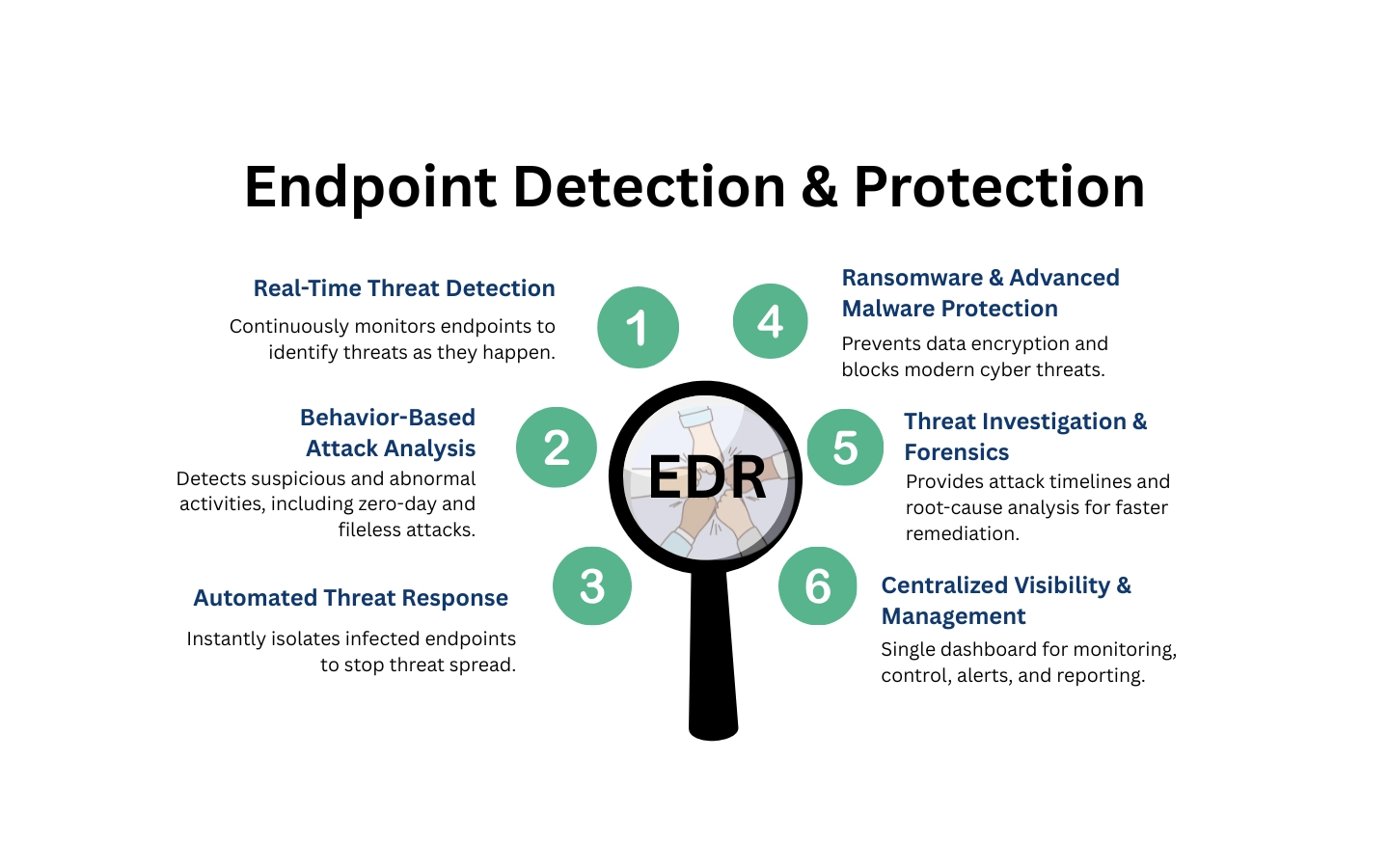
Additionally, choose a platform with centralized visibility and intuitive dashboards that simplify investigation and threat hunting.
Finally, consider scalability, along with the vendor’ssupport expertise and managed service options, to ensure long-term protection as your business grows.